
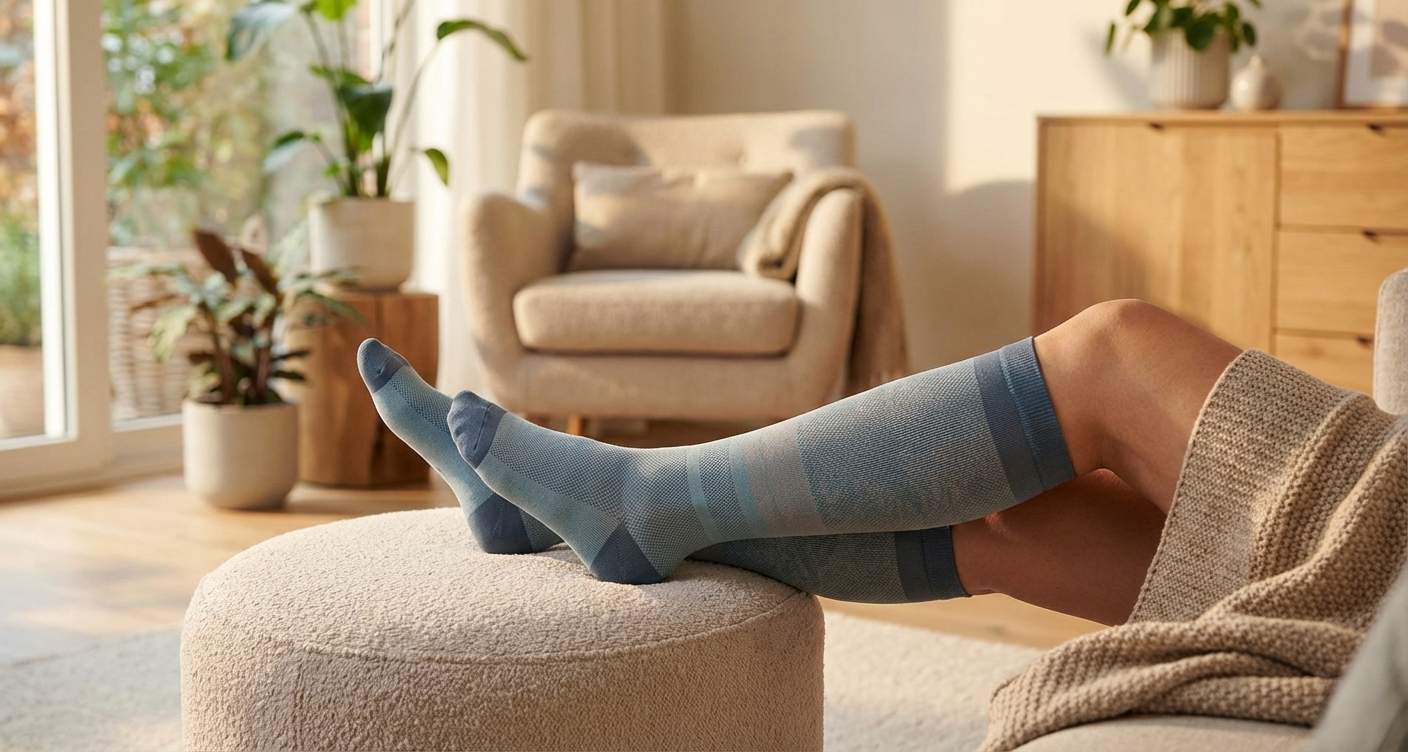
If your legs feel heavy by mid-afternoon, your ankles swell after a long shift, or your feet go numb on flights, you’re not alone and you’re not overreacting. “Poor circulation” symptoms can be uncomfortable, distracting, and a sign that something deeper deserves attention.
The right socks can make a noticeable difference in how your legs and feet feel day to day. The not-so-good news is that the wrong socks can do the opposite. They can pinch, trap fluid, or create a tight band that makes symptoms worse.
This guide will help you choose the best kind of socks for circulation based on what you’re trying to improve, such as everyday leg fatigue, swelling, varicose veins, travel comfort, pregnancy swelling, or recovery, so you can feel better without guessing.
What “better circulation” actually means and why it matters for sock choice
Most “circulation socks” help with venous return, which is the process of moving blood back up from your legs to your heart. Veins rely on one-way valves and the calf muscles acting like a pump. When you sit or stand for long stretches, blood and fluid can pool in the lower legs, leading to swelling, aching, and that “tight shoes by evening” feeling.
Compression socks work by applying gentle, controlled pressure that supports the veins and reduces fluid buildup. For many people, this is the main reason circulation socks feel so helpful.
But there’s another side: arterial circulation, which delivers oxygen-rich blood down to your feet. If someone has significant arterial disease, strong compression can be unsafe. That’s why “best socks for circulation” isn’t one-size-fits-all. Your best option depends on whether you’re dealing with venous pooling, swelling, risk factors, or true arterial issues.
If you’re unsure which bucket you’re in, start with comfort and safety: socks should never cause pain, numbness, or color changes in your toes.
The best socks for circulation and when each makes sense
For most people shopping for better circulation, the top contenders fall into three categories. Here’s how to think about them without getting overwhelmed.
Graduated compression socks are the go-to choice when your goal is to reduce swelling, heaviness, or vein-related discomfort. “Graduated” means they’re snugger at the ankle and gradually less tight higher up the leg, which supports upward blood flow. Many readers who sit at a desk, work on their feet, travel frequently, or manage mild varicose vein symptoms find these provide the most noticeable end-of-day relief.
Mild support socks can be a comfortable entry point if you simply want your legs to feel less tired without the firmer feel of true graduated compression. They’re often easier to put on and can still help with that “my legs feel worked” sensation after long days.
Non-binding or “diabetic-style” socks are best when your main problem is that regular socks leave deep marks, feel restrictive, or worsen foot sensitivity. These are designed with a looser, gentler top band and smoother construction. They don’t actively “push” blood up the leg the way compression does, but they can be a smart choice for comfort, especially if you’re prone to skin irritation or you hate the squeezed feeling.
If you want less swelling and heaviness, consider trying graduated compression first. If you mainly want no tight bands and fewer sock marks, explore non-binding options.
How to pick the right compression level (mmHg) for your goal
Compression strength is usually labeled in mmHg (a pressure measurement). Higher numbers mean firmer compression, but “more” isn’t automatically “better.” The best compression level is the one you’ll actually wear consistently and that matches your symptoms.
In general terms:
- Light compression (often around 8–15 or 10–15 mmHg) tends to work well for mild end-of-day fatigue, long workdays, and first-time wearers who want a subtle “supported” feel.
- Moderate compression (often around 15–20 or 20–30 mmHg) is commonly chosen for more noticeable swelling, frequent travel, pregnancy-related swelling, or vein discomfort (like aching around varicose veins). This range can feel dramatically more supportive, but sizing becomes more important.
- Higher compression (often 30+ mmHg) is typically used for specific medical situations and is best chosen with a clinician’s guidance and proper fitting.
If you’re buying your first “circulation socks,” many people do best starting in a light-to-moderate range and seeing how their legs respond for a week. A useful micro-test: your legs should feel less heavy by the end of the day, not more “trapped.” If you’re curious, consider buying one pair first rather than a multipack, as your comfort feedback is valuable.
Fit and design features that prevent the “too tight” problem
Circulation benefits live or die by fit. A great compression sock in the wrong size can feel like a tourniquet; an oversized one can slide down and bunch. It’s also a problem.
Here’s what matters most when you’re comparing options:
Sizing based on measurements, not just shoe size. Compression socks typically use ankle and calf circumference. Measure when swelling is minimal and follow the brand’s chart. If you’re between sizes, prioritize a fit that doesn’t dig in at the top band.
Knee-high is the sweet spot for most people. Knee-high graduated compression is popular because it targets the lower leg, where blood pooling often occurs, without the added fuss of thigh-high styles. Thigh-high or full stockings may be recommended for specific needs, but they’re harder to fit and more likely to slide if sizing isn’t perfect.
Never roll the top down. Rolling creates a tight band that can restrict flow and worsen swelling above the fold. If the sock is too tall, look for a better length instead of folding it.
Toe and seam comfort isn’t a luxury, it’s adherence. If seams irritate you, you won’t wear the socks long enough to benefit. Many people prefer a smoother toe area or an open-toe style, especially if they run hot or want more room.
Fabric that manages heat and moisture. Breathable, moisture-wicking knits help you keep wearing them comfortably, especially if you wear them at work or while traveling.If you have sensitive skin, look for softer blends and avoid anything that feels scratchy.
If you’ve tried compression once and hated it, don’t assume it “doesn’t work.” Often the issue is the top band, the length, or a compression level that’s simply too aggressive for your day-to-day.
Wearing compression socks correctly
Even the best socks for circulation won’t help much if they’re worn inconsistently or put on after swelling has already peaked.
For most people, the best routine looks like this:
Put them on early in the day, ideally before you’ve been sitting or standing for hours. Smooth the fabric as you go so it lies flat. Wrinkles can create pressure points. The sock should feel snug and supportive, not painful.
Wear them during the window you need the most help: a long shift, a travel day, a desk-heavy workday, or any time you know you’ll be less mobile. Many people take them off before bed unless a clinician has given different instructions.
If getting them on is the hardest part, you’re in good company. A simple trick is to turn the sock partially inside out to the heel, place your foot, then unroll up the leg. Some people find textured grip gloves or a donning aid makes compression socks dramatically easier to use. These are worth considering if you want the benefits without the daily struggle.
When to avoid compression socks or talk to a clinician first
Compression socks are widely used and often very safe, but there are situations where it’s smart to pause and get personalized guidance.
Talk to a clinician before using firm compression if you have known peripheral arterial disease, significant numbness or reduced sensation in your feet, non-healing wounds, or severe skin fragility. Also ask for advice if you have complex swelling, a history of serious clots, or you’ve been told your circulation is poor and you’re not sure whether the issue is venous, arterial, or both.
And don’t ignore “red flag” symptoms. Seek medical care urgently if you notice sudden swelling in one leg, especially with warmth, redness/discoloration, tenderness, or new shortness of breath or chest pain. Socks can support comfort, but they’re not a substitute for diagnosing a potentially serious cause.
A practical mindset shared by many clinicians is that if symptoms change rapidly, become painful, affect only one side, or are new, you should get them checked.
Small habits that make circulation socks work even better
The biggest hidden win for circulation is still movement. Socks support your system, but your calf muscles do the pumping.
If you want to get more out of whatever socks you choose, pair them with tiny, repeatable habits: stand up and walk for a couple minutes every hour, do slow ankle circles while seated, flex and release your calves a few times before you stand, and stay hydrated, especially on travel days when it’s easy to drink less.
Many people also find it helps to elevate the legs for a few minutes in the evening. Think of socks as the “support,” and movement as the “engine.” Together, they’re far more effective than either one alone.
Conclusion
For most circulation needs such as leg heaviness, mild swelling, travel discomfort, and vein-related aching, graduated compression socks (often knee-high) are the best all-around choice because they support blood return from the ankles upward. If you’re new to compression, start with a light-to-moderate mmHg range you can comfortably wear, and choose a pair that fits your ankle and calf measurements so it doesn’t bunch or dig in. If your priority is avoiding tight bands and sock marks (or you have sensitive feet), non-binding socks can improve comfort even if they don’t provide true graduated compression. Most importantly, avoid rolling socks down, put them on earlier in the day, and get medical advice if you have arterial disease concerns or sudden, one-sided swelling.
If your legs regularly feel worse at the end of the day, don’t miss the simple upside of the right circulation socks: more comfort, less swelling, and fewer “heavy leg” evenings. Often no other changes are needed. Consider starting with one well-fitting pair in a comfortable compression level, wear them on the days you need the most support, and pay attention to how your legs feel after a week. Small improvements add up fast and once you find the right style, you’ll likely wonder why you waited.