If your summer plans involve sunshine, steps, and staying comfortable, choosing the best breathable socks for summer matters more than you think. Each foot has roughly a quarter-million sweat glands and can produce up to half a pint of moisture on a hot day. Without the right breathable socks for hot weather, this moisture quickly leads to blisters, odor, and discomfort inside your shoes. The right pair of moisture-wicking socks keeps air moving, pulls sweat away from your skin, and dries fast. This guide cuts through marketing fluff and shows you exactly what to look for, how to match socks to your shoes and activities, and simple ways to keep your feet cooler all season.
What Makes Socks Truly Breathable?
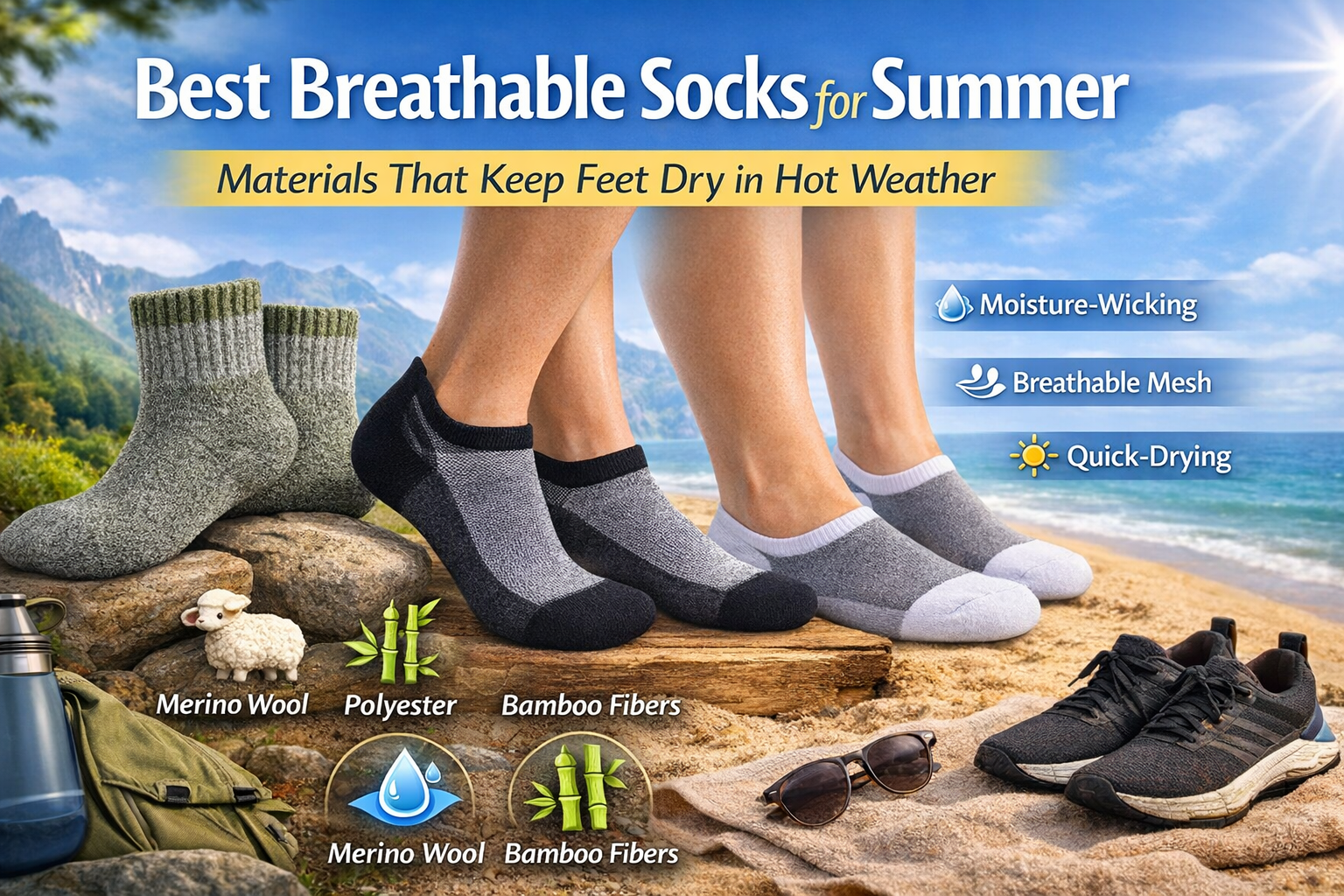
Breathable socks are designed to move sweat away from the skin, allow airflow, and dry quickly, preventing moisture buildup that causes odor and blisters.Three pillars decide most of the performance:
Fiber: how moisture is handled at the yarn level
- Merino wool absorbs and redistributes moisture vapor before it turns into liquid sweat, then releases it as you move. It also resists odor naturally.
- Synthetic fibers don’t hold water, so they move liquid sweat outward where it can evaporate quickly.
- Plant-based regenerated fibers like bamboo viscose or modal feel very soft and can manage moisture well when blended correctly, but they’re usually less durable.
If you want an easy starting point for summer, consider a merino/nylon blend or a polyester/nylon blend with a touch of elastane for stretch. Many readers find these mixes the best blend of cooling, fast drying, and longevity.
Fabric construction: how the knit breathes
Breathability rises when the sock’s knit actively channels air and sweat:
- Mesh zones over the instep and under the arch let heat vent upward.
- Fine-gauge knits reduce bulk, speed drying, and minimize friction.
- Light terry underfoot adds a thin cushion to disperse pressure without trapping heat.
Look closely at the sock: you should see or feel a difference in texture where airflow is encouraged.
Fit and height: how the sock stays put and moves moisture
A breathable sock can still cause blisters if it shifts or bunches. Seek:
- A deep heel pocket and light arch wrap that keep fabric aligned.
- A flat or seamless toe to remove hot spots.
- A cuff that holds without biting.
Height also plays a role. In hot weather, quarter or micro-crew heights often outperform no-shows for all-day comfort because they wick sweat beyond the shoe collar and allow more evaporative area. If you love no-shows, choose a pair with a heel tab and grippy heel details to prevent slipping.
Best Materials for Breathable Socks in Summer
Choosing fibers is like choosing the right tool: there’s no single winner for every job. Here’s how to match material to your needs.
Merino Wool Blends for Sweat Control
- Why they stay cool: Merino fibers are hygroscopic, pulling moisture vapor off your skin and spreading it through the fabric so it can evaporate gradually. That vapor management reduces that clammy-on/clamy-off cycle that triggers friction and blisters.
- Comfort and odor control: Merino naturally resists odor, a lifesaver in travel or back-to-back training days.
- Durability and feel: Pure merino can wear faster; blends with nylon boost strength without killing breathability. Look for 40–70% merino with nylon for durability and elastane for fit.
- Best for: Hiking, travel, long days in sneakers or casual shoes, and anywhere odor matters. If you tend to blister, consider merino first.
If you’re undecided, try a light-cushion merino/nylon micro-crew for your longest, hottest days, you’ll likely notice the difference by lunchtime.
Polyester and Nylon Performance Socks
- Why they stay cool: Polyester moves liquid sweat quickly, while nylon adds abrasion resistance. Together they dry fast and feel crisp in muggy conditions.
- Odor and care: Synthetics don’t have the same natural odor control as merino, but many performance socks add odor-inhibiting finishes. Wash promptly and air-dry to keep them fresh.
- Best for: Running, gym sessions, court sports, and any activity where rapid drying beats all else.
Runners often prefer ultra-light polyester/nylon no-shows with heel tabs for a locked-in feel that won’t overheat. You can try Polyester and Nylon socks.
Bamboo and Viscose Soft Summer Socks
- Comfort: Exceptionally soft, smooth against skin, and pleasantly cool to the touch.
- Moisture: These fibers absorb and spread moisture well; paired with ventilation knit patterns, they can feel breezy in everyday wear.
- Caveats: Some viscose-based socks pill sooner and may not match nylon’s long-term durability. “Antibacterial” claims vary after repeated washing; rely on good hygiene and rotation.
- Best for: Office, travel, and people who value plush softness in hot weather. Look for blends with nylon to extend lifespan.
Are Cotton Socks Good for Hot Weather?
Cotton is breathable as a fabric, but in socks it absorbs and traps moisture against your skin. This is especially uncomfortable in summer heat. If you love the hand-feel, choose blends where cotton is the minority component and is paired with polyester/nylon to speed drying. For long, sweaty days or high-output activities, skip high-cotton socks entirely.
Design Details That Boost Summer Breathability
Small construction choices make a big difference once the mercury rises:
- Ventilation mapping: Look for visible mesh over the instep and at the toe box; this is where feet radiate heat.
- Light, strategic cushioning: A thin terry pad under the forefoot and heel disperses impact without smothering airflow. Avoid thick, full-foot pile in hot weather.
- Flat or seamless toe: Less bulk means fewer hot spots.
- Heel tabs and snug cuffs: Keep the sock stable when sweat makes feet slippery.
- Subtle compression: Light compression through the midfoot supports circulation and minimizes fabric shift without feeling tight in heat.
Consider trying one pair with each of these design cues; many readers find this combination becomes their default summer setup.
Match Your Summer Socks to Your Shoes and Plans
Your footwear and environment decide which sock thrives. Use these snapshots to dial it in quickly.
- Running and training: Choose ultra-light or light-cushion no-show or quarter socks with mesh across the instep and a heel tab. Polyester/nylon blends excel for rapid drying when intervals or humidity crank up. If you’re blister-prone, a merino/nylon light-cushion option can reduce shear by managing moisture vapor earlier.
- Day hikes and city exploring: Go with a merino/nylon micro-crew or quarter height. You’ll get better evaporative area above the shoe collar and more odor resistance for all-day wear. A thin terry underfoot can prevent hot-foot without feeling bulky.
- Work boots and long shifts: Pick a crew-height sock with mapped ventilation and reinforced heel/toe. Merino/nylon blends manage sweat under leather, while a light compression band helps keep socks from creeping. If your environment is extremely hot, a synthetic blend with aggressive mesh can feel drier between breaks.
- Office, travel, and everyday sneakers: A fine-gauge crew in merino/nylon or a soft viscose/nylon blend keeps feet cool and presentable. Odor resistance matters when you’re in closed spaces. Neutral colors and smooth knits pair well with casual and business-casual looks.
Not sure where to begin? You might explore a three-pair rotation: a merino/nylon micro-crew for long days, a polyester/nylon no-show with a heel tab for workouts, and a fine-gauge crew for work or travel. That simple kit covers 95% of hot-weather scenarios without overthinking it.
How Socks Should Fit in Hot Weather
A breathable sock that doesn’t fit is just frustration waiting to happen. Aim for:
- A foot-hugging shape with zero bunching in the arch or toe box.
- The heel fits perfectly in the heel cup and will not slip down..
- Enough toe room to wiggle without extra fabric folding over itself.
If you’re between sizes, most people do better sizing down in synthetic-dominant socks for a sleeker wrap, and sticking true-to-size in merino blends. Many readers find that quarter and micro-crew heights stay drier than no-shows on all-day outings, especially in humid climates.
Care Tips to Keep Socks Breezy and Odor-Resistant
- Wash inside out on a gentle, cool cycle; this exposes sweat salts to detergent and preserves the outside knit.
- Skip fabric softener. It coats fibers and slows wicking.
- Air-dry when you can, or tumble low. High heat can degrade elastane and shrink wool.
- Rotate pairs. Let yesterday’s socks and shoes dry fully before the next wear. Pull insoles out of shoes overnight to speed evaporation.
- On trips, a quick sink wash with mild soap plus a towel roll-squeeze gets socks nearly dry in minutes.
You’ll extend the life of your socks and keep them highly breathable. These small habits make a big difference quickly.Common Summer Sock Myths
Budget, Durability, and When to Spend
Breathable summer socks don’t have to be pricey. You can find solid, fast-drying blends for under 10 a pair. Premium merino or highly engineered performance socks often run 18–$28 per pair and typically deliver smoother seams, better ventilation mapping, and longer life. If you’re on your feet all day or hate midseason replacements, consider buying fewer high-quality pairs and rotating them well.
Common Summer Sock Myths
- “Thinner is always cooler.” Not necessarily. Ultra-thin socks can saturate quickly and feel clammy. Light cushion strategically placed can keep feet cooler by reducing pressure and allowing airflow channels to work.
- “Cotton is best for heat.” In socks, high-cotton content traps moisture next to skin. Blends or performance fibers breathe better once sweating starts.
- “Bamboo is automatically antibacterial.” The silky comfort is real, but odor performance varies by blend and finish. Treat bamboo viscose like any other fabric: rotate and wash promptly.
Conclusion: Choosing the Best Breathable Socks for Summer
Start with materials that manage moisture the way you sweat: merino/nylon blends for vapor control and odor resistance, polyester/nylon blends for ultra-fast dry times, or soft viscose/nylon for everyday comfort. Prioritize breathable construction, including visible mesh areas, fine gauge, flat toe seams, and light strategic cushioning. Select a height that moves moisture beyond your shoe collar. Fit should be snug without pressure points, with a firm heel pocket and mild arch wrap. Care for them by washing inside out, skipping fabric softener, drying low, and rotating pairs. A small upgrade here prevents blisters, keeps odor at bay, and turns hot days into easy ones.
FAQ: Breathable Socks
What socks are best for sweaty feet?
Merino wool or polyester moisture-wicking socks are usually the best choice for sweaty feet because they pull moisture away from the skin and dry quickly.
Are cotton socks good for summer?
Cotton socks can absorb sweat but often hold moisture against the skin, which may cause discomfort and blisters in hot weather.
What are the most breathable socks?
The most breathable socks are typically made from merino wool blends or synthetic moisture-wicking fabrics with mesh ventilation zones.