
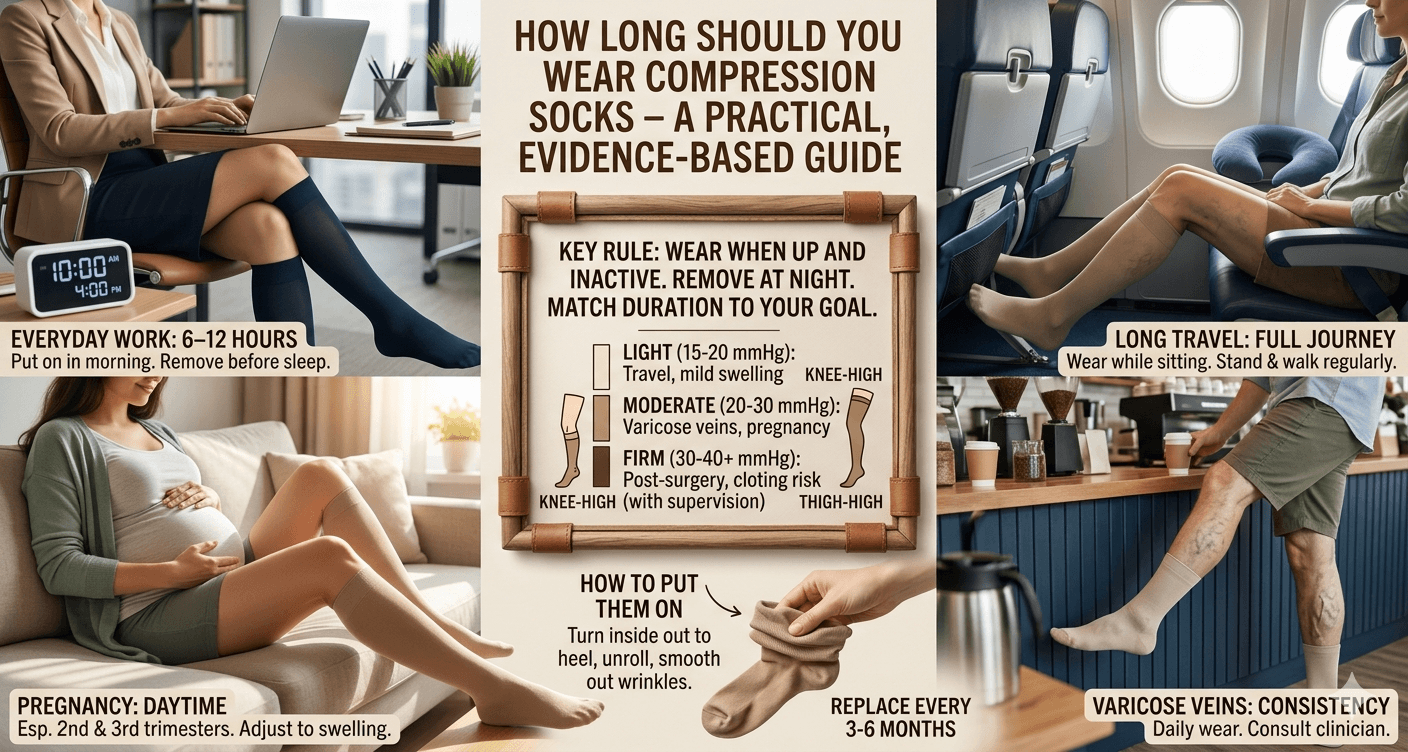
If your legs feel heavy by mid‑afternoon, your ankles puff after a long day, or travel leaves you achy, you’ve probably wondered: how long should you wear compression socks each day to actually make a difference? The short answer is this wear them during the hours you’re upright and least able to move take them off at night unless your clinician says otherwise and match the duration to your goal relief prevention or recovery. The longer answer below will help you dial in a schedule that works, stays comfortable, and supports healthier circulation without guesswork.
How long should you wear compression socks for different situations
Everyday standing or desk work: Slip compression socks on in the morning ideally within 30 minutes of getting out of bed then keep them on through your workday. Most people wear them 6–12 hours and remove them before sleep. You’ll often feel the biggest difference in the afternoon, when gravity and inactivity tend to pool fluid around the ankles.
Long flights or road trips: Put them on before boarding or hitting the highway and keep them on for the entire journey. If you’re still sitting soon after (layover, meetings, more driving), continue wearing them. Many travelers also keep them on for a few hours after arrival to offset lingering swelling. Pair them with movement: stand, walk, flex and point your ankles regularly, and stay hydrated.
Pregnancy: Wear them during daytime hours especially in the second and third trimesters or any day your legs tend to swell. Remove at night. If you notice morning swelling, start earlier; if evenings are the problem, keep them on until you’re ready for bed.
Varicose veins, spider veins, or chronic venous insufficiency: Consistency matters more than any single long session. Aim for daily wear during waking hours when you’re on your feet or seated for long stretches. Remove at bedtime unless your provider advises otherwise.
Post‑surgery or after a clot: Follow your clinician’s prescription on both pressure and duration. This may mean all‑day wear for several weeks, and sometimes overnight, depending on your procedure and risk.
Sports and recovery: Some athletes like light‑to‑moderate compression during runs or rides; many prefer them after workouts for a few hours to reduce post‑exercise swelling. Evidence on performance is mixed, but they’re generally safe; let comfort and perceived benefit guide you.
Sleep: For most people, skip overnight wear. When you’re lying flat, gravity’s effect on leg veins is reduced. Nighttime socks can crease or roll, creating pressure points. Exceptions exist in specialty cases so only wear them to bed if your clinician specifically recommends it.
If you remember one thing, let it be this: compression socks are most useful when gravity and stillness are working against you. Wear them when you’re up and inactive; give your legs a break at night.
Why wear time matters for compression socks effectiveness
Graduated compression socks are tighter at the ankle and gradually gentler toward the knee or thigh. That pressure helps your veins push blood back toward the heart and reduces the diameter of distended veins and limits fluid from leaking into the tissues creating effects that build hour by hour. The benefits are cumulative during the day you wear them; they don’t “carry over” if you skip the times you need them most. That’s why wearing them for the right hours such as the middle and late parts of your day matters more than hitting an arbitrary number of total hours.
What compression level lets you wear them longer
To wear compression socks for an entire workday or travel day comfortably, match the pressure (measured in mmHg) to your needs:
- Light support (about 15–20 mmHg): great for travel, long standing/sitting days, mild swelling, or a first try. Many readers start here to build the habit without feeling squeezed.
- Moderate/medical support (about 20–30 mmHg): commonly recommended for varicose veins, pregnancy‑related swelling, and mild chronic venous insufficiency. If you’ve been advised to wear compression for a condition, this is a typical range.
- Firm support (30–40 mmHg and above): reserved for more advanced venous disease or post‑thrombotic management and should be used under medical supervision.
Length also matters. Knee‑high socks are sufficient for most day‑to‑day goals because the calf is your “second heart,” pumping blood upward with each step. Thigh‑high or pantyhose styles are used selectively and can be harder to fit and tolerate for long hours.
If you’re unsure, consider starting with light support and moving up if needed, or ask your clinician or a medical supply store to measure you. A 10‑minute fitting can mean all‑day comfort.
Beginner schedule: how many hours to wear compression socks
If this is your first pair, your skin and nerves need a brief adjustment period. Instead of jumping straight to full‑day use, build up over a week:
Begin with a couple of hours the first day, focusing on your most symptom‑prone window (for many, that’s after lunch). Add one to two hours each day, checking your skin for redness that doesn’t fade, itching, numbness, or tingling. By day five to seven, most people comfortably wear compression socks for an entire workday. If anything feels off, step back to the last comfortable duration, confirm your size, or try a lighter pressure.
Many readers find they stick with compression longer when they keep a clean pair at the office or in a gym bag. You might try that to stay consistent.
How to put them on
Compression that’s strong enough to help is snug by design. The trick is getting a smooth, even fit without bunching or rolling. Slide them on first thing in the morning when swelling is lowest. Turn the sock inside out to the heel, place your foot, then unroll it gently up the calf, smoothing as you go. Avoid yanking from the top or rolling the cuff down, which can act like a tourniquet.
Dry, well‑moisturized skin reduces friction. A dab of lotion, cornstarch, or a donning glove can make mornings easier. If the top band leaves deep marks or your toes tingle, reassess your size or pressure. Persistent creases or slipping usually signal a mismatch between your leg shape and the sock or a worn‑out pair. Most socks last three to six months of daily wear; when they get easier to pull on, they’re often past their supportive prime.
Special situations: how long is long enough?
Post‑op and clot prevention: After certain surgeries or if you’ve had a deep vein thrombosis wear time is a prescription instead of a preference. Your care team may ask for all‑day wear for a defined period. Adhere closely, because in these cases compression is part of your treatment plan, not just a comfort measure.
Desk work and standing professions: Baristas, nurses, teachers, retail staff, and desk‑bound pros often benefit from full workday wear. If your ankles look or feel better on the days you wear them, that’s your feedback loop to continue. Combine socks with movement “snacks”: calf raises at your desk, ankle circles on calls, and brief walking breaks.
Pregnancy and postpartum: Hormonal shifts and a growing uterus increase venous pressure, particularly in the third trimester. Daily, daytime wear is a practical target. Many new parents continue for several weeks after delivery while swelling eases. If one leg swells much more than the other or pain appears, call your clinician promptly.
Travel: Four hours or more of stillness increases clot risk for susceptible travelers and nearly always increases swelling for everyone else. Wear socks for the full duration plus the remainder of the day if you’re still mostly seated. Don’t skip movement: stand up, stroll the aisle, flex your calves, and drink water. For short hops with lots of walking on either side, movement may matter more than socks, but if you already own a pair, wearing them is a low‑effort win.
Athletics: If you like the feel during activity, wear them. If you prefer them after, aim for one to three hours post‑workout. Recovery is personal; choose the window that leaves your legs feeling fresher the next day.
Lymphedema: Compression is essential here, but it’s a specialized area with day‑ and night‑time garments designed for 24‑hour strategies. Work with a certified lymphedema therapist on exact durations.
When to pause, adjust, or ask a clinician
Compression socks are considered safe for most people, but they’re not for everyone. Use caution and talk with a clinician if you have known peripheral arterial disease, advanced neuropathy, very fragile skin, untreated skin infections or open wounds on the legs, or if you can’t reliably sense or communicate discomfort. If you experience numbness, cold feet, color changes, or pain while wearing socks, remove them and get medical advice. And if one leg is suddenly more swollen, tender, or warm than the other, seek prompt care to rule out a clot.
How to make compression socks comfortable for long wear
Too tight or tingling: Start with a lighter grade (15–20 mmHg) or check your size. Compression that’s too strong or too small is hard to tolerate for long hours.
Indentations at the top band: Make sure the sock stops two finger‑widths below the knee crease. If it’s too long and you roll it down, you’ll create a constriction point. Consider a different brand or petite/long sizing for a better length.
Slipping or bunching: This usually means the sock is stretched out or the proportions don’t match your calf. Try a fresh pair or a style with a different knit.
Hot at work: Choose moisture‑wicking fabrics and lighter colors. Many readers keep a thinner pair for summer and a cushier pair for winter.
Skin irritation: Wash socks after each use with mild soap, rinse thoroughly, and air‑dry to preserve elasticity. If irritation persists, apply a gentle, fragrance‑free moisturizer at night when the socks are off.
Conclusion
Wear compression socks during the hours you’re upright and least able to move such as through your workday or on flights or long drives or during pregnancy or on days your legs swell and remove them at night unless your clinician advises otherwise. Start with light to moderate pressure you can comfortably keep on for 6–12 hours, building up over a week if you’re new to compression. For post‑surgery care or a history of clots, follow your prescribed duration precisely. If a pair feels too tight, leaves deep marks, or causes numbness, size up or lower the pressure so you’ll actually wear them when they matter most.
Compression Socks Wear Time FAQs
Can I wear compression socks all day?
Yes, if they fit well and feel comfortable, it’s common to wear them throughout your waking hours, especially on longer standing or sitting days. Remove them at night unless instructed otherwise.
How many hours per day is best?
There’s no magic number; match your wear time to your needs. For most people, that means “for as long as you’re upright and relatively inactive.” A typical range is one workday’s worth of hours.
Should I wear them to bed?
Generally, no. Lying flat reduces the gravitational load on your veins, and overnight wear can create pressure points if the sock folds or rolls. Only wear them to sleep if your clinician recommends it for a specific condition.
Can I wear them on just one leg?
Yes. If symptoms like swelling or varicose vein discomfort are worse on one side, it’s fine to wear a sock on that leg only. Many people compare legs this way to judge benefit.
Do sleeves work as well as socks?
Calf sleeves support the calf muscle pump but leave the ankle and foot uncovered. If your feet swell, choose full socks.
When will I notice results?
Many people feel lighter legs the first day and see reduced ankle swelling by evening. For chronic vein symptoms, give it consistent daily use over several weeks.