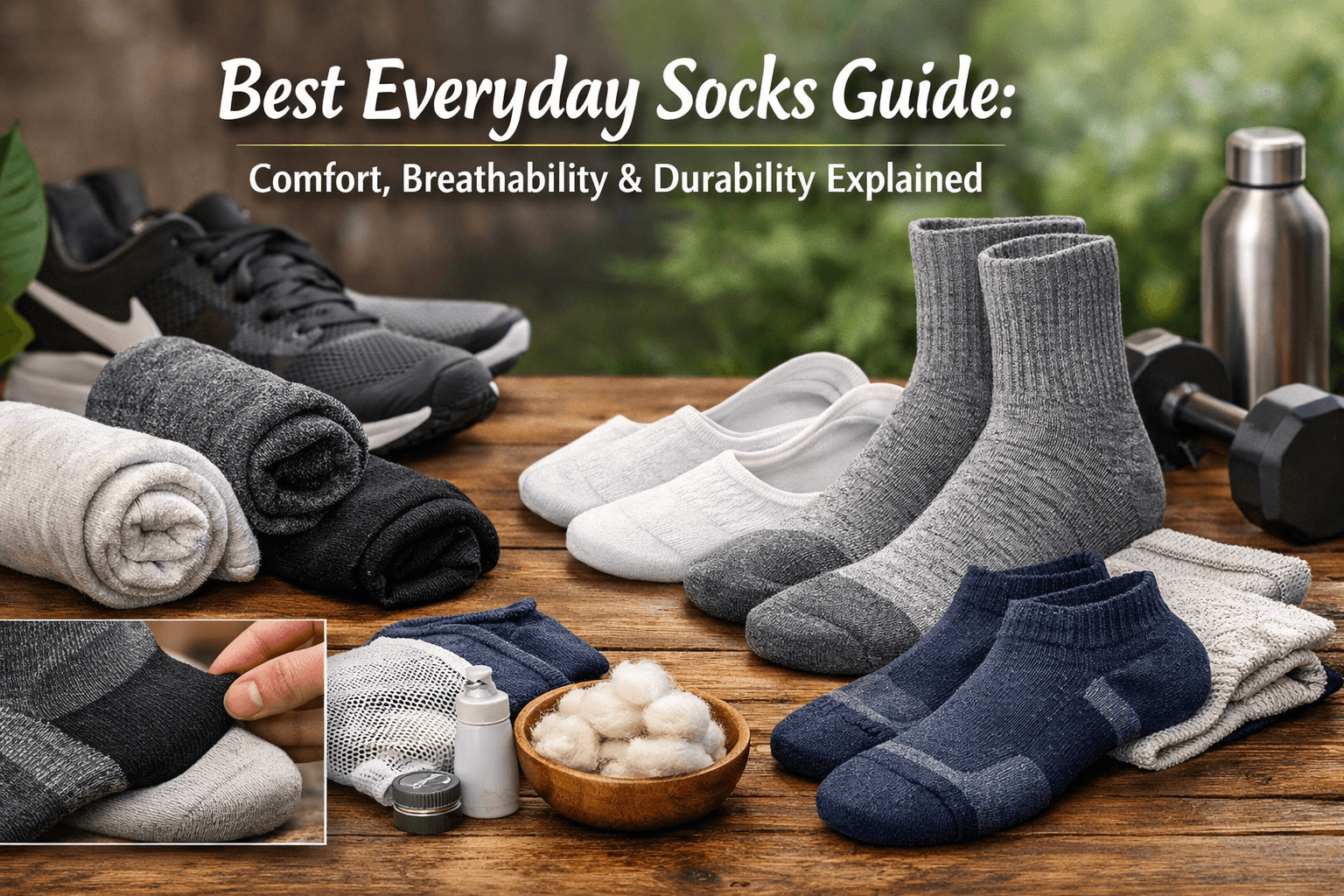
If your day ends with tired, sweaty, or blistered feet, your socks are quietly working against you. The best everyday socks for comfort and durability don’t just look tidy in sneakers or under trousers, they regulate temperature, wick moisture, resist odors, and hold their shape from the morning commute to the late-night dog walk. This guide cuts through the marketing noise to help you choose socks that feel great now and keep feeling great after dozens of washes, so you can stop fussing with sagging cuffs and start enjoying effortless comfort.
Consider this your expert roadmap to fabrics, construction, fit, and care, written to help you buy with confidence and build a small, smart rotation that covers work, weekends, and workouts without overspending.
What are the best everyday socks?
Best everyday socks are breathable, moisture-wicking, and durable socks made from merino wool or cotton blends with proper cushioning, arch support, and a snug but non-restrictive fit for all-day comfort.
What “everyday socks” really need to do
Most of us move through different micro‑climates in a single day: a brisk sidewalk, a heated office, a stuffy subway, a sprint to catch an elevator, an evening stroll. Everyday socks must adapt. That means:
- Breathability for temperature swings.
- Moisture control for commuting and light activity.
- A soft, non‑irritating interior for long wear.
- Snug but not constrictive hold so they don’t slip or bite.
- Durable heels and toes that won’t blow out in a month.
When socks meet these basics, your shoes feel better, blisters are rarer, and subtle but real your posture and mood improve because your feet aren’t a distraction. If your drawer is full of “just okay” pairs, you’re leaving easy comfort on the table.
Best sock materials for everyday wear
The choice of breathable sock materials like merino wool and cotton blends determines 80% of performance. Here’s how to match fabric to real life without memorizing a textile textbook.
- Merino wool blends are the gold standard for everyday versatility. Merino’s fibers are naturally moisture‑wicking and odor‑resistant, managing heat in summer and holding warmth when it’s cool. These socks dry faster than cotton, feel soft, and perform well in sneakers, casual boots, and even at the gym. Consider them the “wear anywhere” option.
- Combed or long‑staple cotton blends deliver that classic, plush feel many people love. They breathe nicely and look clean with denim or chinos. The trade‑off: cotton absorbs and holds moisture more than merino, so feet can feel damp in heat or during activity. Look for blends with polyester/nylon plating for durability and quicker dry time, plus 2–5% elastane for recovery.
- Performance synthetics excel at quick‑drying, abrasion resistance, and crisp shape retention. Everyday athletic pairs often combine a soft face yarn with a tougher synthetic outer layer so they stay smooth inside while resisting friction outside. If your feet run hot or you’re on your feet all day, synthetic‑rich socks with mesh zones can be a game‑changer.
- Viscose from bamboo or modal blends feel silky and cool against skin. They can be wonderfully comfortable for office and lounge wear, but look for nylon reinforcement or you’ll trade softness for early holes.
Don’t chase “100% anything.” Blends outperform single fibers for everyday use. A merino/nylon/elastane trio or a cotton/nylon/elastane trio checks the most boxes for comfort and longevity.
Sock construction that improves durability
Two socks can share the same fabric label and feel completely different after lunch. That’s construction. When you shop, scan product pages for these cues:
- Needle count: Higher needle counts produce a smoother, denser knit that resists pilling and slides easily into dressier shoes. Mid‑gauge balances cushioning and breathability for casual wear.
- Toe seam: Look for “hand‑linked” or “flat toe seam.” This eliminates the bulky ridge that irritates toenails and causes hot spots.
- Heel shaping: A Y‑stitch or deep heel pocket keeps the cup anchored so the sock doesn’t migrate under your arch.
- Zoned cushioning: Targeted terry loops under the heel and forefoot soften impact without making the entire sock spongy. Full‑cushion crews are cozy in boots; light cushion or “no cushion” crews disappear in slim sneakers or loafers.
- Mesh ventilation: Subtle mesh on the instep or around the toes dumps heat and moisture on the move.
- Plated reinforcement: A tough synthetic yarn wrapped on the outside with the softer yarn inside adds lifespan without scratchiness.
- Stay‑up welt: A well‑balanced top cuff grips without biting. If you experience calf dents or tingling, choose a “non‑binding top” or size up.
These clues separate “feels fine in the package” from “still feels great at 5 p.m.”
Sock height and when to wear each
- No‑show socks disappear under low‑cut sneakers and loafers. For slip‑free wear, seek heel grips and a deep heel pocket. Great in summer or when you want a bare‑ankle look without the blisters that true barefoot wear invites.
- Ankle and quarter socks are the everyday athletic sweet spot with enough coverage to prevent collar rub, low profile for casual footwear, and easy to pair with joggers or shorts.
- Crew socks are the most versatile everyday height. They protect your ankles from boot collars, look polished with trousers, and add a subtle style line with sneakers.
- Over‑the‑calf socks shine under dress pants or with tall boots. They never slip and keep your lower leg warm on commutes.
If you’re building from scratch, most readers are happiest starting with mostly crew, a few ankle/quarter for workouts, and a couple of discreet no‑shows for warm days.
Cushion and compression: find your “just right”
More cushion isn’t automatically more comfortable. It’s about matching density to footwear and activity.
- Ultralight/no cushion: Sleek feel, best breathability, and zero bulk. Ideal for snug shoes or warm offices.
- Light cushion: The everyday sweet spot for sneakers and casual boots softens steps without trapping heat.
- Medium/full cushion: Cozy in colder months or when you’re on hard floors all day. Pair with roomier footwear.
Compression is similar. Light compression (8–15 mmHg) can reduce fatigue during long shifts or travel. If you have circulatory concerns, diabetes, or neuropathy, choose non‑binding tops and consult your clinician for tailored advice.
How to choose the right everyday socks before you buy a drawerful(60‑second fit test)
- Slide the sock on and align the heel cup. If the heel lands under your arch, size up; if it rides up your Achilles, size down.
- Stand, wiggle your toes. You should feel zero pressure on toenails and no bunching at the ball of your foot.
- Walk 20 steps. The cuff should stay put without leaving a deep imprint. If the sock twists or creeps under your arch, try a slimmer cut or a style with an arch band.
Pass this test and you’ll avoid the three biggest everyday complaints: slipping, hotspots, and end‑of‑day ache.
Odor and sweat control, minus the gimmicks
You don’t need harsh chemical finishes to keep socks fresh. Three strategies work reliably:
- Favor merino or well‑vented synthetics if your feet run hot.
- Rotate pairs so each has 24 hours to fully dry between wears (odor bacteria love damp).
- Wash inside‑out to lift skin oils from the terry loops where funk begins.
If you’re curious about antimicrobial treatments (silver, copper, etc.), they can help, but a breathable fabric and proper care do most of the heavy lifting for everyday wear.
Building the perfect sock rotation
You don’t need 30 pairs. You need the right mix.
For most readers:
- 6–8 pairs breathable crew socks (merino or cotton blend with nylon reinforcement) for day‑to‑day outfits.
- 3–4 pairs ankle/quarter performance socks with mesh zones for gym days and hot commutes.
- 2 pairs no‑show socks with heel grips for warm‑weather sneakers or loafers.
- Optional: 1–2 pairs over‑the‑calf for dress days or winter commutes, and 1 plush house pair reserved for lounging.
This rotation keeps laundry sane, covers all scenarios, and reduces wear on any one pair so they last longer. Consider trying one pair in each category before committing to multi‑packs; many readers do a “test week” and then stock up on the winners.
Care that doubles the life of your socks
Small habits add months and sometimes years to sock life.
- Wash inside‑out in cold water; avoid fabric softener (it clogs fibers and kills wicking).
- Tumble dry low or, better, hang dry; high heat degrades elastane and shrinks natural fibers.
- Use a mesh laundry bag so singles don’t vanish and heels don’t snag zippers.
- Trim toenails smoothly; most toe holes start from inside.
- Rotate shoes, too; letting insoles dry fully reduces sock abrasion and odor.
You’ll also notice socks stay comfier later in the day when the elastane hasn’t been baked in a hot dryer.
Seasonal strategies and common scenarios
- Hot, humid summers: Choose merino‑blend or synthetic crews with mesh over cotton‑heavy options. No‑shows with heel grips shine here. You won’t miss the swampy feel you’ve tolerated.
- Cold offices and winter commutes: Medium cushion merino crews keep ankles warm without bulk. Over‑the‑calf versions stay put under trousers and trap a pleasant micro‑climate.
- On‑your‑feet jobs: Light‑to‑medium cushion with a durable nylon exterior, flat toe seam, and a supportive arch band minimizes fatigue. If your footwear runs warm, prioritize vented panels.
- Travel: Pack three quick‑dry pairs and wash on the go. Merino wins for re‑wear; synthetics dry fastest. Don’t miss the peace of mind of a mini clothesline and gentle detergent sheet.
- Sensitive skin: Seek OEKO‑TEX Standard 100 or similar certifications, flat toe seams, and non‑binding cuffs. Viscose or modal blends can feel soothing; ensure nylon reinforcement to avoid early wear.
Sustainability signals worth noticing
If eco‑impact matters to you, look for:
- Responsible Wool Standard (RWS) merino and “mulesing‑free” claims.
- Recycled nylon or polyester percentages.
- Certifications like OEKO‑TEX that screen for harmful substances.
- Durable construction. The greenest socks are the ones you don’t have to replace every quarter.
You might explore a trial pair from a brand that publishes fiber sources and repair/replace policies as transparency is a good sign you’ll get quality.
Troubleshooting: quick fixes for everyday sock pain points
- Socks sag mid‑day: Try a higher needle count, over‑the‑calf height, or a size down. Wash cool, skip softeners.
- Holes at the big toe: Smooth toenails, choose a style with plated reinforcement at the toes, and avoid shoes with tight toe boxes.
- Heel blisters: A deeper heel cup plus light cushion under the heel, or switch to quarter/crew height to protect from shoe collar rub.
- Funk that won’t quit: Wash inside‑out, add a vinegar rinse occasionally, and ensure shoes dry fully. Consider merino for its natural odor control.
- Sock twisting in shoes: Seek an arch band and a Y‑heel; try a slimmer or smaller size.
Small adjustments here prevent bigger frustrations later.
How to spot real value (and avoid false economy)
Price per pair varies widely, but value comes from cost per wear. A 8 pair that lasts 20 wears costs 0.40 per wear; a 20 pair lasting 120 wears costs 0.17 per wear and feels better for months longer. Signs you’re getting value:
- Clear fiber percentages (not vague “premium fabric” claims).
- Hand‑linked toe, reinforced heel/toe, and mesh zones listed.
- Multiple sizes instead of “one size fits most.”
- Consistent customer photos showing shape retention after washing.
If you’re upgrading on a budget, start with two merino‑blend crews and two vented ankle pairs. Many readers find that once they feel the difference, they prefer fewer, better socks and actually spend less over time.
Summary: your everyday‑sock blueprint
Choose blends, not pure fibers: merino/nylon/elastane or cotton/nylon/elastane for balance.Prioritize build quality including flat toe seam, Y‑heel, targeted cushion, mesh vents, and a stay‑up welt. Match height to shoes and cushion to footwear volume. Nail the 60‑second fit test before buying multiples. Build a tight rotation of crews, a few ankle/quarter pairs, and a couple of no‑shows, then care for them: wash inside‑out, go easy on heat, and skip softener. Expect better comfort immediately, fewer blisters, and lower cost per wear over time.