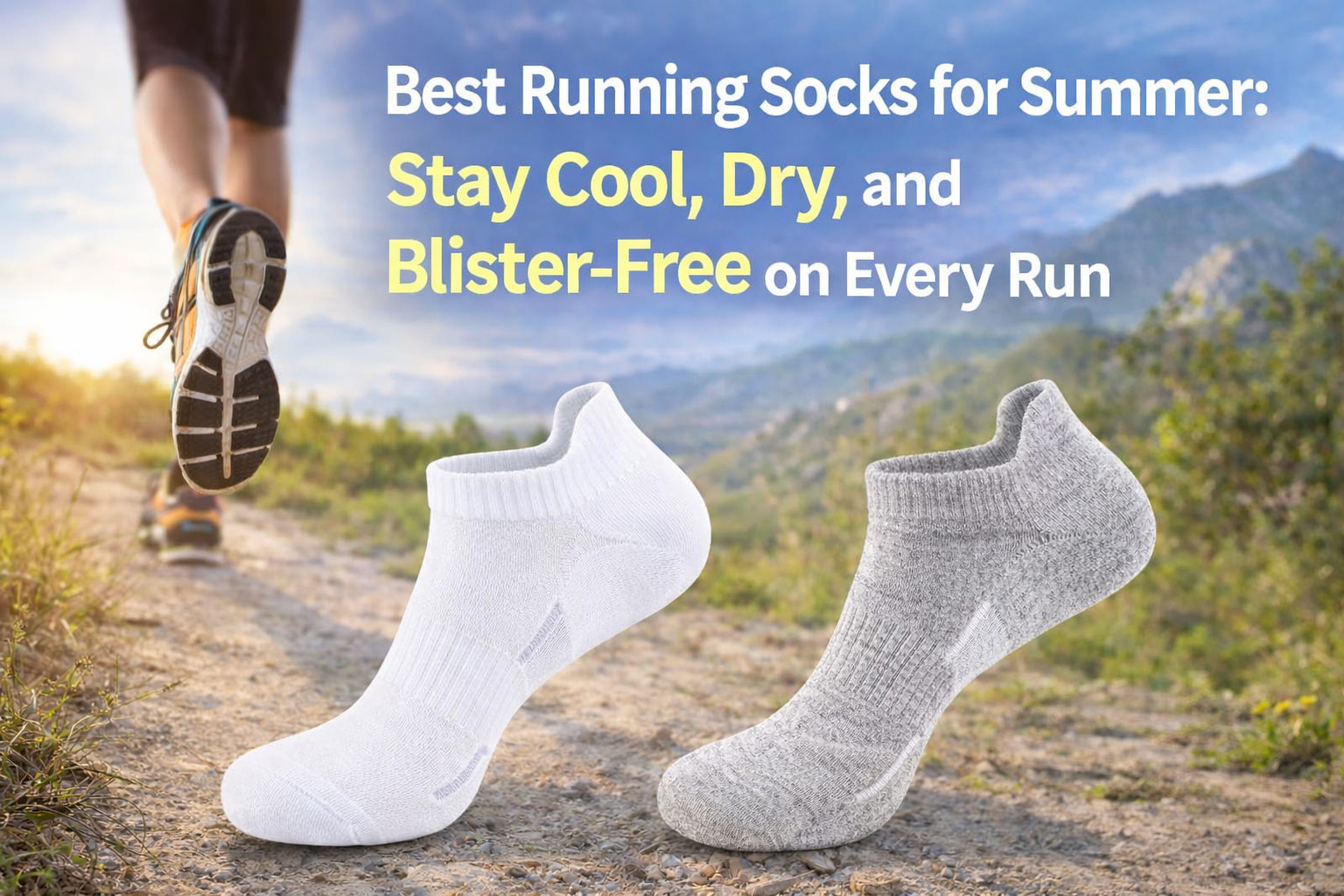
Hot miles can turn great runs into grind-fests fast. Sweat builds up inside your shoes, friction increases, and small hot spots can quickly become painful blisters.
The best running socks for summer solve these problems by keeping your feet dry, reducing friction, and improving airflow. Thin, breathable socks made with moisture-managing fabrics help prevent blisters, control odor, and keep your feet comfortable from the first mile to the last.
If you’ve ever finished a summer run with soggy shoes or raw heels, choosing the right summer running socks can make a noticeable difference.
What Makes a Great Summer Running Sock
In hot weather, your sock’s job is simple but high‑stakes: keep skin dry, manage heat, and minimize rubbing. That’s what prevents blisters and swampy shoes. You’ll do best with thin, breathable, moisture‑managing socks that fit like a second skin and stay put. When a shoe already fits well, your socks shouldn’t add bulk; they should enhance the shoe’s feel, not mask it. If your current pair is thick, squishy, or cotton‑heavy, it’s likely working against you in the heat. Consider upgrading, you’ll feel the difference on day one.
The Fabric Formula: What to Wear
- High‑performance synthetics (nylon, polyester, olefin) shine in summer. They’re engineered to move sweat off your skin quickly, dry fast, and stay smooth against friction. Olefin in particular is extremely hydrophobic, which makes it great for hot and humid runs.
- Merino wool isn’t just for winter. Fine‑gauge merino blends regulate temperature, manage moisture across changing conditions, and resist odor naturally. In ultralight weaves, merino feels surprisingly cool and comfortable in mid‑summer miles, especially if you run long or sweat heavily.
- Elastane/spandex isn’t about moisture, but it’s about fit. A small percentage adds snap‑back stretch so the sock hugs your foot and doesn’t slide.
- Skip cotton. It absorbs and holds sweat, raising friction and blister risk. In summer, cotton becomes a wet sponge inside your shoe.
- Bamboo/viscose can feel soft and is often marketed as “cooling,” but performance varies by blend. If you love it, look for high ventilation zones and a significant synthetic component for faster drying.
If you tend to get hot feet or run in humid climates, consider trying a synthetic‑dominant sock for speedwork days and an ultralight merino blend for long runs. Many readers find this two‑sock rotation covers nearly every summer scenario.
How Sock Thickness Affects Summer Running
For hot weather, err on the side of less. Ultralight or lightweight socks reduce heat buildup and dry faster. That said, your ideal thickness depends on your feet and shoes:
- Ultralight: Feels invisible, maximizes breathability and proprioception. Great for racing and speed days. If your shoes already fit snugly, ultralight keeps volume in check.
- Lightweight with targeted cushion: Adds a hair of padding under high‑pressure zones without raising temperature much. Many marathoners prefer this balance late in long runs when feet swell.
- Medium cushion: More plush, but can run warm in summer. If you’ve lost some natural footpad with age or do high-impact routes, consider it and pair it with a highly ventilated upper.
Don’t overlook shoe volume. If your shoes feel roomy and your heel slips, a slightly thicker summer sock can “tune” the fit. If your shoes already run tight, thinner is your friend.
Breathability and Construction Cues That Matter
The best summer socks aren’t just made of one fabric but are instead purposefully engineered. Here’s what to look for when you inspect a pair:
- Mesh ventilation zones: Translucent or open‑knit panels over the instep and toe box promote airflow and speed evaporation. If you hold the sock to the light, you should see air channels on top, not underfoot.
- Dual‑layer moisture management: Some performance socks place a hydrophobic yarn next to the skin and a more sweat‑friendly yarn outside to pull moisture away. This combo keeps your skin drier during long, humid efforts.
- Seamless or hand‑linked toe: Eliminates bulky seams that can rub as mileage and heat rise.
- Deep heel pocket and ankle/Achilles tab: A contoured heel stops slippage; a small rear tab prevents collar rub and shields your skin from the shoe counter, especially useful in no‑show cuts.
- Anatomical left/right shaping: Subtle asymmetry mirrors your foot’s curves, reducing wrinkles that cause hot spots.
- Targeted arch wrap: Gentle midfoot compression stabilizes fabric against the skin so the sock won’t migrate as you sweat.
- Grip yarns or micro‑treads in heel/forefoot: Increase in‑sock traction so your foot doesn’t slide on sweaty descents.
- Toe‑socks option: If you blister between toes, individual toe sleeves separate skin‑on‑skin contact and can be a summer game‑changer.
If you’re on the fence, consider trying one “ultra‑vented” pair with visible mesh and one “ultralight structured” pair with compression and a seamless toe. Many runners end up using both depending on the run.
Sock Height: No‑Show, Quarter, or Crew?
- No‑show/tab: Coolest and lightest feel. The tab helps with heel rub. Popular for road running and racing.
- Quarter (¼) crew: This is a smart middle ground for summer. It offers just enough height to block debris and protect ankle bones from shoe collars without feeling hot.
- Crew: Slightly warmer but protective. Consider for dusty trails, brush, or if your shoes rub your ankles. Also helpful for sun protection.
If pebbles are constantly sneaking into your shoes or your outer ankles get rubbed raw, consider stepping up one height and your skin will thank you.
Match the Sock to the Run
Humid Long Runs
When sweat rate spikes, choose ultralight or lightweight socks with open mesh on top, a snug arch wrap, and quick‑dry yarns. A small heel tab prevents rub on water‑logged shoes. If you’re prone to maceration (wrinkly, soft skin), a dual‑layer moisture system helps keep the skin surface drier.
Speed Days and Racing
Look for ultralight, low‑bulk socks with firm hold and a seamless toe. The “locked‑in” feel reduces in‑shoe movement at high cadence. If your racing shoes fit tight, thin socks prevent toe pressure as feet warm.
Trail Miles
Quarter or crew height shields you from grit and brush. Opt for a durable heel/forefoot knit, mild compression to anchor the sock, and mesh over the instep. If you get between‑toe blisters on descents, toe‑socks can be worth the adjustment period.
Daily Training and Commutes
A versatile lightweight pair with targeted cushion under heel/forefoot and robust ventilation covers most bases. If odor is a concern, a merino‑blend option helps between washes. Many readers keep one breathable synthetic in rotation for hot afternoon runs and one merino blend for early mornings.
Recovery Days, Travel, and All‑Day Wear
Light compression around the arch/ankle may reduce mild swelling after long efforts. Odor‑resistant merino or anti‑odor synthetics keep things fresh if you’re stuck in shoes for hours.
Fit, Sizing, and Shoe Volume Tuning
Your sock should hug without squeezing. If the arch band bites or the toe feels cramped, you’ll notice it more in heat. Size by your running shoe size, but check brand size charts, because some run long or short. If you’re between sizes and prefer a race‑fit feel, consider sizing down; for toe‑socks, stay true to size. Remember, summer feet swell. Leave a bit of room in the toe box, and if needed, loosen your laces across the forefoot after your warm‑up. If a new pair suddenly makes shoes feel tight, switch to a thinner sock rather than forcing the fit.
Care That Extends Life and Stops Odors
Turn socks inside out before washing to clear sweat salts from the inner surface. Use cold water, skip fabric softeners, and air‑dry or tumble low. Rotate at least three pairs to reduce wear and extend elasticity. To fight stubborn stink, a periodic white‑vinegar or baking‑soda soak works wonders on both wool and synthetics. Replace socks when the fabric pills excessively, the heel thins, or the arch wrap feels loose. These are early signs that friction protection is fading.
A Quick Decision Guide: How to Choose Summer Running Socks
- You run hot or in high humidity → ultralight synthetic with open‑mesh top.
- You want fewer odors on multi‑day trips → ultralight merino blend.
- You get heel rub or shoe collar chafe → no‑show with tab or quarter crew.
- You blister between toes → toe‑socks with thin, breathable knit.
- Your shoes feel a touch roomy → lightweight sock with targeted cushion.
- Your shoes feel snug → ultralight, low‑bulk sock.
- You’re on dusty trails → quarter or crew height with debris‑blocking cuff.
- You want a “set and forget” daily pair → lightweight, seamless toe, arch wrap, mesh instep.
Consider trying two contrasting pairs. Many runners discover a clear favorite after a week of hot runs.
A Simple Try‑Before‑You‑Buy Test Plan
- The 10‑minute heat check: Jog easy, then pick up to tempo for two minutes. If the top of your foot feels breezy and the toe box stays dry, you’re on track.
- The wrinkle test: While laced, flex and splay your toes. If you feel fabric bunch at the big toe or under the arch, that pair may rub when wet.
- The slide test: On a gentle downhill, notice if your foot creeps forward inside the shoe. If yes, look for socks with firmer arch wrap or subtle grip yarns in the heel/forefoot.
- The odor check: After a hard run, let the socks dry, then sniff. If they pass, buy a second pair because you’ve found a summer workhorse.
Many retailers offer multi‑pair bundles or satisfaction guarantees. You might explore one single‑pair trial first, then stock up once you’ve confirmed the fit under heat.
Budget, Sustainability, and Value
Price often tracks engineering: higher stitch counts, anatomically shaped panels, and advanced yarns cost more—yet they also tend to last longer and feel better at mile 10 than bargain basics. If you’re budget‑minded, prioritize fabric, ventilation, and a seamless toe first. Sustainability is improving fast in socks: recycled nylon/polyester and low‑impact dye processes are increasingly common, and odor‑resistant fibers mean fewer washes. Many readers choose a durable, well‑made pair over cheaper multi‑packs. Replacing one pair less each season saves money and helps the planet.
Conclusion
Summer running socks should be thin, breathable, and moisture‑managing, with a fit that stays put and a construction that reduces friction: mesh on top, seamless toes, snug heel pockets, and gentle arch wrap. Synthetic blends excel at fast wicking and drying; ultralight merino blends add odor resistance and temperature regulation. Choose height by terrain, tune thickness to your shoe volume, and test for heat, wrinkles, and in‑shoe sliding before you buy multiples. Care matters: wash inside out, skip softeners, rotate pairs, and replace when cushioning or elasticity fades. With two thoughtfully chosen pairs, one ultralight synthetic and one ultralight merino, you’ll cover nearly every hot‑weather run with cool, blister‑smart comfort.
Common Questions
What are the best running socks for summer?
The best summer running socks are thin, breathable, and moisture-wicking. Synthetic blends dry quickly, ultralight merino blends resist odor, and features like mesh zones, seamless toes, and snug heel pockets reduce friction and prevent blisters.
Can merino wool socks be worn in hot weather?
Yes. Fine-gauge merino blends regulate temperature, manage moisture, and resist odor. In ultralight weaves, merino feels cool and comfortable even during long summer runs.
How do I prevent blisters while running in hot weather?
To prevent blisters, choose socks that keep skin dry, fit snugly, and minimize friction. Look for seamless toes, dual-layer moisture management, and a snug heel pocket.
Should I wear no-show, quarter, or crew socks in summer?
No-show socks are the coolest for road running and racing. Quarter socks protect from debris while remaining breathable. Crew socks offer extra ankle protection on trails and dusty paths.
How many pairs of summer running socks do I need?
Three to five pairs in rotation are recommended. A two-type rotation, one ultralight synthetic and one ultralight merino, usually covers most hot-weather running conditions.
Are cotton socks bad for summer running?
Yes. Cotton absorbs sweat, holds moisture, and increases friction, which raises blister risk. Summer running socks should be synthetic or merino blends for optimal performance.
How should I care for my summer running socks?
Turn socks inside out before washing, use cold water, skip fabric softeners, and air-dry or tumble low. Rotate multiple pairs to extend lifespan and maintain elasticity. For stubborn odor, a vinegar or baking soda soak helps.