If you spend hours on your feet, you know the feeling: aching arches, hot spots that threaten to blister, and calves that feel twice their normal size by day’s end. The right socks can make a real difference, especially if you’re looking for the best socks for standing all day without changing your shoes. In fact, the best socks for standing all day work like wearable gear for your feet: they manage moisture, reduce friction, add strategic cushioning, and support healthy circulation so you finish strong instead of limping to the car.
This guide distills what matters, why it matters, and how to choose socks that genuinely help. Whether you’re a nurse pulling a double, a teacher pacing a classroom, a line cook on hot floors, or a retail pro clocking 10,000+ steps, use this as your blueprint to pain‑free feet.
What are the best socks for standing all day?
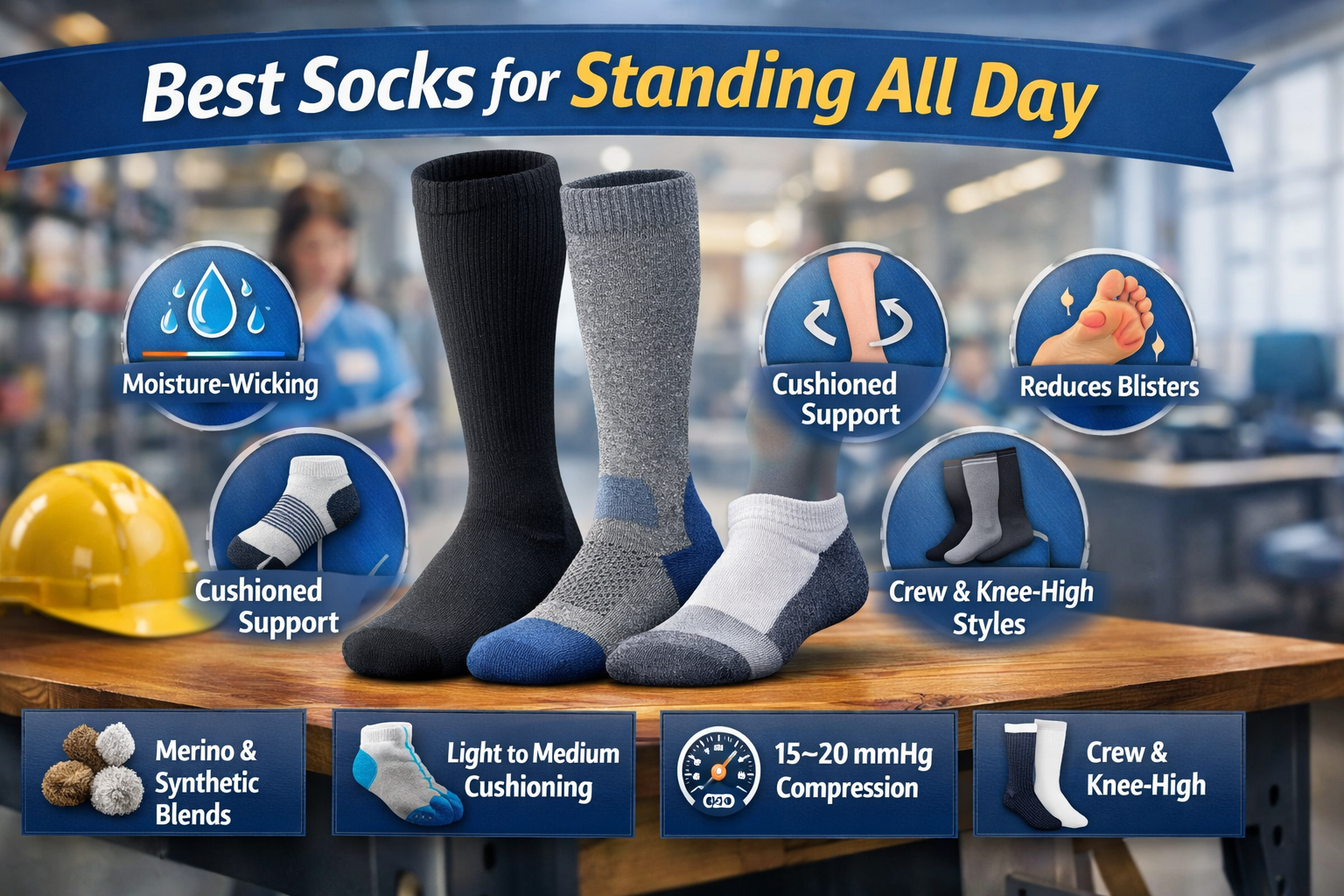
The best socks for standing all day are made from moisture-wicking materials like merino wool or synthetic blends, include targeted cushioning, and may offer 15–20 mmHg compression to reduce swelling, fatigue, and blisters.
Why Standing All Day Hurts
Standing sounds passive, but physiologically it’s hard work. Your legs are fighting gravity to move blood back to the heart. Your feet are absorbing small, repetitive impacts while your skin endures constant shear from micro‑movements inside the shoe. Add heat and sweat, and you’ve got a perfect recipe for swelling, fatigue, and blisters.
The right socks address these stressors in four ways:
- Moisture control keeps skin drier, reducing blister risk and odor.
- Friction management (through fit, knit, and seams) prevents hot spots.
- Targeted cushioning spreads pressure and tames hard floors.
- Graduated compression supports circulation and helps limit swelling.
When these elements line up, your feet feel fresher longer, and recovery is faster between shifts. Many readers find that a thoughtful sock upgrade is the lowest-cost change that delivers the greatest comfort, and it is worth trying before expensive insoles or new shoes.
What to Look for in the Best Socks for Standing All Day
Fiber blend: merino and technical synthetics beat cotton
Cotton feels soft but holds moisture, which makes it a poor choice for sweaty feet during long standing shifts. Trapped sweat softens skin, raises friction, and invites blisters. Instead, look for:
- Merino wool blends for all‑season comfort. Merino regulates temperature, wicks well, and resists odor without feeling scratchy.
- Nylon or polyester for durability and moisture‑transfer speed.
- Olefin for exceptional wicking in very sweaty or hot settings.
- A touch of elastane for stay‑put stretch.
Consider trying a merino/nylon/elastane blend for everyday standing, or a nylon/olefin mix if your feet run hot.
Cushioning: match thickness to floors and footwear
More cushion isn’t always better. You want enough padding to reduce pressure points, but not so much bulk that it tightens your shoes and creates new rub points.
- Light cushion works for cushy midsoles or snug shoes.
- Medium cushion suits most hard floors and long shifts.
- Max cushion helps on concrete or under heavier body loads but make sure your shoes have room. If your laces are suddenly too tight, drop to a thinner sock.
Compression: gentle pressure, big difference
Compression socks for standing all day help limit swelling and leg fatigue by applying the most pressure at the ankle and easing upward.
- 15–20 mmHg is a great starting point for long standing days.
- 20–30 mmHg can help more with persistent swelling, but consult a clinician if you have circulatory issues, diabetes, neuropathy, or a history of blood clots. Choose knee‑high for leg swelling, or crew/quarter if you want mild foot and ankle support without full‑calf pressure.
Fit and construction: comfort lives in the details
Seams and zones matter more than most people realize.
- A seamless or flat‑linked toe prevents rubbing across the toenails and bunions.
- A deep heel pocket anchors the sock and stops slippage.
- An arch band adds gentle midfoot support and reduces bunching.
- Reinforced heel and toe extend life under high wear.
- A non‑binding cuff should hold without biting; consider wide‑cuff options if you have larger calves.
If your socks slide down, blister, or leave deep marks, the construction isn’t right for your foot and leg.
Height: protect, support, and match shoes
- No‑show and low‑ankle socks work in athletic shoes but can invite heel rub without a protective tab.
- Quarter and crew heights protect ankles from boot collars and spills, making them great for hospitality and warehouse settings.
- Knee‑highs deliver the best compression for swelling control.
Odor and temperature control: think climate
Merino does a stellar job of odor management and thermal regulation across seasons. In hot kitchens or warehouses, consider thin knits with ventilation zones. In winter, a slightly denser merino blend insulates without getting clammy.
Durability and care: buy smart, wash smarter
Dense knits in nylon‑reinforced blends last longer. Turn socks inside‑out to wash, skip fabric softeners, and air‑dry or tumble low. Proper care can easily double a sock’s life, so consider rotating three to five pairs to reduce wear and tear. Many readers choose a small “work‑only” rotation to keep performance consistent.
What to Choose by Job or Environment
Socks for healthcare and shift work
Look for knee‑high graduated compression (15–20 mmHg) with light to medium foot cushioning and a flat toe seam. Breathable merino or high‑wick synthetics keep feet comfortable through long rounds. If you’re often in warm units, choose a thinner knit with vent panels. Consider trying one pair during your next set of shifts, then you’ll feel the difference in your calves by day three.
Socks for teachers and retail staff
You’re walking and standing in bursts. A crew‑height sock with medium cushion and an arch band provides all‑day balance. If your legs feel heavy by afternoon, add 15–20 mmHg knee‑highs a few days per week to compare.
Socks for hospitality workers and food service
Heat, spills, and long hours call for quarter or crew socks with thin to medium cushion, high wicking, and a smooth cuff that won’t trap heat. Prioritize fast‑drying synthetics or merino blends. Don’t overlook the benefits of a heel tab when wearing low-cut shoes. This small detail greatly helps prevent blisters.
Socks for warehouse, trades, and construction
Pair work boots with over‑the‑calf or crew socks that have reinforced toes, shins, and heels. Medium to max cushion reduces concrete shock; summer shifts favor thinner merino or high‑wick synthetics, while cold months welcome a slightly denser knit. If your calves swell in boots, consider graduated compression to keep fatigue at bay.
Office, hybrid, and travel days
For desk‑to‑standing routines, a dress‑sock look with discreet 15–20 mmHg compression keeps legs fresh without bulk. On travel days, compression is especially helpful. Consider wearing a pair throughout your trip to reduce post-flight ankle swelling.
Pregnancy
Swelling can ramp up quickly. Knee‑high 15–20 mmHg compression with soft cuffs is a comfortable starting point. If you need more support, check with your healthcare provider before moving to higher levels.
Match Socks to Foot Concerns
sweaty feet and hot spots
Avoid high‑cotton content. Choose thin merino or olefin‑rich blends with mesh ventilation. A snug heel pocket and flat toe keep friction low. You might also change into a fresh pair mid‑shift; it’s a simple way to restore comfort.
Plantar fasciitis or heel pain
Seek medium cushioning under the heel and forefoot, plus a mild arch band. This doesn’t replace orthotics, but it reduces localized pressure. Pair with supportive shoes and consistent calf/foot mobility work.
Bunions and forefoot pressure
A seamless toe and roomier forefoot knit prevent rubbing. Avoid tight, narrow compression over the toe box; choose socks that allow natural toe splay.
Wide calves
Look for wide‑cuff or specifically “wide‑calf” knee‑highs with the same compression rating. A cuff that stays up without biting is critical; if you’re between sizes based on calf circumference, size up.
Sensitive skin or eczema
Choose fine‑gauge merino or smooth synthetics with minimal seams and pre‑wash before wear. Avoid scratchy fibers or thick toe seams.
Diabetes or neuropathy
Prioritize moisture management and low‑friction construction. Many people find the most comfort with non-binding cuffs and light compression, but needs differ. Consult a clinician for personalized guidance.
Sizing and Fit: Get This Right and Everything Else Works Better
For knee‑high compression socks, measure both ankle circumference (above the ankle bone) and the widest part of your calf in the morning before swelling starts. Match those numbers to the manufacturer’s chart. For crew and quarter socks, choose based on shoe size and pay attention to width notes if you have high volume feet.
Fit checks that signal “just right”:
- The heel cup sits exactly on your heel without pulling underfoot.
- The cuff hugs without leaving deep impressions.
- No excess fabric bunches at the toes or arch.
- With compression, you will feel gentle upward pressure for relief, not pain or numbness.
If you’re between sizes and don’t need firm compression, consider the larger size for comfort. If you’re chasing maximum support, the smaller may offer a closer fit, but never at the cost of numbness or tingling.
Smart, Simple Picks for Common Situations
- Most people on hard floors: crew‑height, merino/nylon blend, medium cushion, 15–20 mmHg optional.
- Hot environments or very sweaty feet: thin, ventilated nylon/olefin or merino blend with light cushion; quick‑dry focus.
- Steel‑toe or safety boots: over‑calf or crew with reinforced toe and shin, medium to max cushion, moisture‑forward fibers.
- Travel or noticeable ankle swelling: knee‑high graduated compression (15–20 mmHg); consider 20–30 mmHg with clinician guidance.
- Dress shoes at work: fine‑gauge crew or knee‑high with discreet compression, light cushion for a sleeker fit.
If you’re unsure where to begin, consider trying one pair that matches your primary environment. Wear it on your longest day, then note differences in swelling, hot spots, and end‑of‑day energy. Many people are surprised how quickly socks change the equation.
Pairing Socks with Shoes and Insoles
Socks can only do so much if your footwear fights them. A few synergy tips:
- Leave room. If you switch to thicker, cushioned socks, ensure your shoes still allow natural toe splay. Tight shoes amplify friction.
- Use removable insoles. Supportive insoles plus targeted sock cushioning reduce pressure better than either alone.
- Lace for comfort. Runner’s lacing or skipping eyelets over sensitive zones can relieve top‑of‑foot pressure that grows across a long day.
- Mid‑shift refresh. Swapping into a dry pair at lunch is a low‑effort way to reset comfort on marathon days.
- Keep feet dry. If blisters plague you, dust a small amount of non‑talc powder or use a swipe of antiperspirant on high‑friction zones before pulling socks on.
Care, Longevity, and Cost per Wear
Treat work socks like performance gear, not throwaway basics. Wash inside‑out on cool, skip fabric softeners, and air‑dry when possible. Rotate multiple pairs to reduce compression fatigue and heel wear. Replace your socks when you notice thinning under the ball of the foot, loose cuffs that no longer fit snugly, or recurring blisters even with a proper fit, as the knit material may have worn out. The small, steady investment in quality socks usually pays for itself in fewer foot issues and longer‑lasting comfort.
Quick Safety and Health Notes
Compression can be incredibly helpful, but it’s not one‑size‑fits‑all. If you have diabetes, neuropathy, significant varicose veins, a history of blood clots, peripheral arterial disease, or unexplained swelling, check with a healthcare professional about the best compression level and sock type for you.
Best Socks for Standing All Day
The best socks for standing all day manage moisture, reduce friction, provide targeted cushioning, and may include graduated compression (typically 15–20 mmHg) to help limit swelling and leg fatigue. Materials like merino wool or technical synthetics help keep feet drier, while proper fit and construction reduce hot spots and blisters.
- Best material: Merino wool blends or moisture-wicking synthetics
- Best cushioning: Light to medium depending on floors and footwear
- Best compression: Typically 15–20 mmHg for long standing days
- Best height: Crew, quarter, or knee-high depending on shoes and support needs
Conclusion: Your Shortcut to Happier Feet
Standing all day challenges your skin, muscles, and circulation. The best socks for standing all day use moisture-moving fibers like merino wool or synthetic blends, smooth construction, and the right level of cushioning to reduce friction and fatigue. Graduated compression, usually 15–20 mmHg, can help reduce swelling and keep legs energized, particularly in knee-high styles. Choose height to match your shoes, fit that hugs without biting, and blends that suit your climate. Start with one or two pairs tailored to your job and foot concerns, care for them well, and evaluate after a long shift; if your feet end the day drier, less swollen, and less sore, you’ve found your formula.