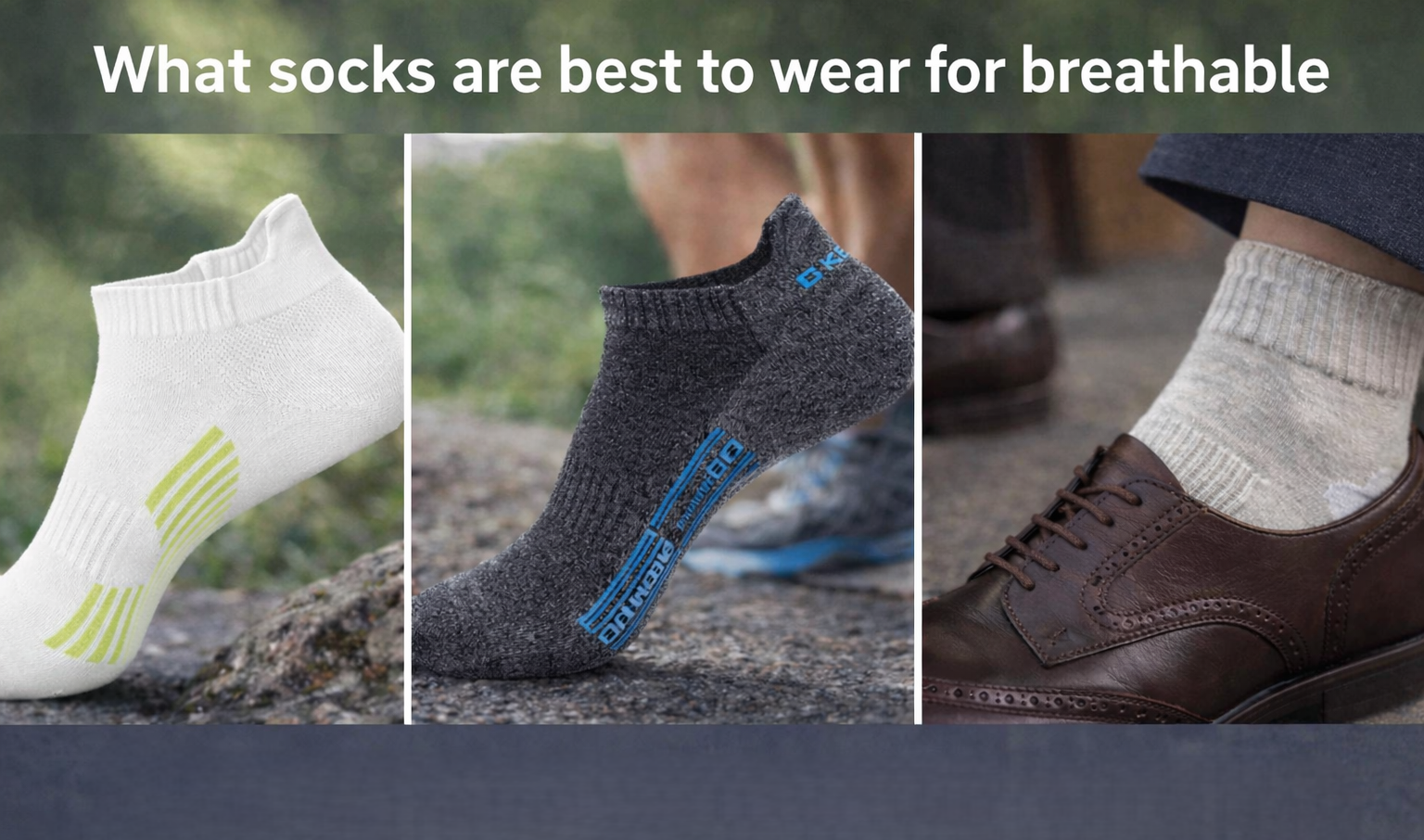
If your feet run hot, your socks can make the difference between “fine” and “I can’t wait to take my shoes off.” Dampness, odor, blisters, and that sticky, overheated feeling usually aren’t a “you” problem, they’re a fabric-and-fit problem.
Breathable socks aren’t just thinner socks. The best breathable socks move sweat away from your skin, let heat escape, and stay comfortable inside real-world footwear like sneakers, work boots, and dress shoes, often for hours at a time. When you get the formula right, your feet feel cooler, your shoes stay fresher, and you’re far less likely to deal with friction issues that can ruin a walk, a workout, or a long day on your feet.
This guide breaks down what to look for, starting with materials, then construction, and finally how to match socks to your lifestyle, so you can confidently pick a pair that actually breathes.
What “breathable” really means in a sock
Most people think breathability is about airflow alone. In reality, breathable socks are a two-part system:
Moisture management (wicking): Your feet sweat. A breathable sock pulls that moisture off your skin and spreads it through the fabric so it can evaporate instead of pooling.
Heat release (ventilation): The knit structure and thickness determine how easily heat escapes, especially over the top of your foot where shoes trap warmth.
Here’s the catch: a sock can feel “airy” and still leave you damp. That’s why many people get frustrated with basic cotton socks. Cotton can feel soft and light, but it tends to soak up moisture and hold it, which keeps your skin wet longer, exactly what you don’t want if you’re prone to sweat, odor, or blisters.
If you’ve been buying socks based mainly on thickness or softness, consider this your gentle nudge to start with the fiber content on the label. It’s the fastest way to upgrade comfort without changing your shoes.
The best sock materials for breathable comfort
There’s no single perfect fabric for everyone, but there is a clear hierarchy depending on how much you sweat, how long you wear your socks, and what you do in them.
Merino wool: breathable, temperature-smart, and odor-resistant
Merino wool is a top choice for breathability because it does three things well at once: wicks moisture, helps regulate temperature, and resists odor naturally. It can keep you comfortable in heat and in cooler conditions because it doesn’t just insulate, it helps balance temperature swings.
Merino also tends to feel less “wet” against the skin compared with cotton when moisture is present, which matters if you walk a lot, commute, or wear boots. For many people, merino is the easiest “set it and forget it” option for all-day dryness.
Bamboo: soft, breathable, and good for odor
Bamboo-based socks are popular for a reason: they’re often very soft, they breathe well for everyday wear, and many wearers find they help with odor compared with standard cotton socks. They can be a great pick if you want a natural-fiber feel without the “sweat sponge” effect you may get from thick cotton.
One note: “bamboo” on the label usually means bamboo viscose/rayon. Quality varies widely, so pay attention to the blend and construction. A bamboo sock with a bit of nylon and elastane often fits better and lasts longer than one that’s mostly bamboo with minimal reinforcement.
Performance synthetics: best for heavy sweat and workouts
If you sweat a lot or you’re shopping specifically for training, performance synthetics are hard to beat. They’re engineered to move moisture quickly and dry fast, which is why so many running and gym socks lean heavily on polyester/nylon blends.
Synthetics also tend to be durable, hold their shape, and pair well with ventilation zones. The feel can be more “technical” than natural fibers, but if your priority is staying dry during high output, that’s usually a worthwhile trade.
If you’ve ever finished a workout with socks that feel waterlogged, explore a moisture-wicking synthetic blend with targeted mesh on the top of the foot.
Cotton: comfortable for low-sweat, low-stakes wear, but risky for sweaty feet
Cotton isn’t automatically “bad,” but it’s often the wrong tool for sweaty feet. If you barely sweat, wear breathable shoes, and mainly want a soft sock for light activity, cotton can be comfortable.
The problem is consistency: once cotton gets damp, it tends to stay damp. That dampness increases friction and creates a friendlier environment for odor-causing bacteria. If you’ve dealt with hotspots, rubbing, or foot smell, cotton is usually the first thing to reconsider.
Blends: often the real sweet spot
Many of the best breathable socks aren’t 100% of anything. A common high-performance recipe is:
- A primary fiber for moisture and comfort (merino, bamboo viscose, or polyester)
- Nylon for strength
- Elastane or spandex for a secure fit
As a general rule, a breathable sock should feel like it “belongs” on your foot, snug enough not to bunch, but not so tight that it traps heat or leaves deep marks at the cuff.
Next time you’re shopping, take 10 seconds to check the fiber percentages. That small habit saves a lot of trial-and-error.
Knit and design features that help socks breathe and stay comfortable
Material is the foundation, but construction determines whether that material can do its job inside a shoe.
Mesh ventilation zones are one of the biggest breathability upgrades. Look for lighter knit panels across the top of the foot where shoes trap heat rather than uniform thickness everywhere. You’ll often feel the difference immediately on warm days.
Cushioning placement matters, too. More cushion can mean more warmth. For maximum breathability, you typically want light-to-moderate cushioning underfoot for comfort while keeping the upper foot area thinner for heat release.
Seams and friction control are underrated for “breathable comfort.” A sock that technically wicks well but rubs your toes raw isn’t a win. A smoother toe seam or a seamless toe reduces irritation, especially if your feet swell slightly during the day.
Fit is non-negotiable. Socks that are too loose bunch up and create friction; socks that are too tight can trap heat and feel oppressive. If you’re between sizes, don’t guess—use the size chart and consider how your shoes fit. Breathable socks work best when they sit close to the skin so moisture can move outward efficiently.
Finally, sock height can change how dry you feel. A slightly taller sock can give moisture more fabric to travel through, while low-cut socks can feel cooler in sneakers, as long as they don’t slip and bunch.
Choosing breathable socks by how you wear them
“Best” depends on what your day looks like. Use these scenarios to narrow your choice without overthinking it.
Everyday sneakers and walking
For daily wear, most people do best with lightweight merino or bamboo blends (or a soft performance synthetic) in an ankle or crew height. Prioritize a secure heel fit and some ventilation over the top of the foot. You want a sock that stays put on errands, commutes, and casual walks without feeling like athletic gear.
If your shoes are snug, lean lighter on cushioning. A breathable sock can’t ventilate if it’s packed tightly into a shoe with no room for airflow.
Workouts, running, and high-sweat days
For exercise, choose moisture-wicking synthetics or merino-blend performance socks with mesh zones. This is where cotton most often backfires, because sweat output is high and friction is constant.
If you’re prone to blisters, look for a snug, supportive fit and consider designs that reduce rubbing in hot-spot areas. Many active people find that simply switching to a better-wicking sock eliminates “mystery blisters” they assumed were a shoe problem.
Work boots, long shifts, and standing all day
Boots trap heat. For breathable comfort in work footwear, go with merino blends or durable performance synthetics in a crew height, ideally with targeted cushion underfoot not bulky everywhere. You want moisture control plus enough structure to avoid sliding and bunching.
If you often feel damp by lunchtime, consider packing a second pair to swap mid-shift. It’s a small change, but many people find it’s the difference between finishing strong and limping through the afternoon.
Dress shoes and office wear
Breathability in dress shoes is tricky because the shoes themselves usually don’t ventilate well. Look for thin, smooth merino-blend dress socks or a fine-gauge synthetic designed to wick. Avoid thick cotton dress socks that feel nice at first but turn clammy in enclosed shoes.
A taller sock can also reduce slippage and keep fabric from bunching, which is helpful for both comfort and a more polished look.
Hot weather travel and “my feet always run warm”
If heat is your main enemy, go lighter: thin merino, bamboo, or performance mesh socks with minimal cushioning. Pair them with breathable shoes when possible, and rotate pairs so you’re not putting slightly damp socks back on.
Ignoring persistent dampness can lead to recurring odor and skin irritation, which is much harder to fix than simply choosing a better-wicking sock.
Don’t let great socks get ruined by the wrong shoes
Even the best breathable socks struggle in shoes that trap moisture. If your feet sweat heavily, consider how your footwear supports (or blocks) breathability.
Shoes with airflow-friendly uppers, less insulating padding, and removable insoles tend to stay fresher. Rotating shoes also helps by giving pairs a full day to dry, which can dramatically cut odor buildup over time. And if your shoes regularly get damp inside, pulling out the insoles to air out overnight is one of the easiest “why didn’t I do this sooner?” habits.
How to keep socks breathable
Breathable socks work best when their fibers aren’t coated in residue. Wash them in a way that supports wicking and elasticity.
Turn socks inside out to help remove sweat and skin oils. Use a reasonable amount of detergent, skip fabric softener because it can leave films that reduce wicking, and avoid overly high heat when possible. Air-drying is gentler on elastic fibers, but if you use a dryer, keep it moderate so the fit doesn’t degrade quickly.
If a pair looks fine but suddenly feels hot, slippery, or less breathable, it may be buildup or it may simply be worn out. When the fit loosens and the fabric thins unevenly, breathability and comfort drop fast. Replacing a few “problem pairs” often improves your whole week more than you’d expect.
Conclusion
The best socks to wear for breathability are the ones that combine moisture-wicking fibers with smart ventilation and a secure, non-bunching fit. Start by choosing materials that manage sweat well, such as merino wool for balanced all-day comfort and odor control, bamboo blends for soft everyday breathability, or performance synthetics for high-sweat workouts. Be cautious with 100% cotton if you’re prone to dampness or blisters. Then look for mesh zones, appropriate cushioning (lighter is cooler), smooth seams, and the right height for your shoes. Finally, support your socks with breathable footwear, shoe rotation, and wash habits that preserve wicking, so your feet stay cooler, drier, and more comfortable day after day.