
If your socks can clear a room faster than you can kick off your shoes, you’re not alone. Foot odor is frustrating, embarrassing, and one of the most common problems for people dealing with smelly socks.
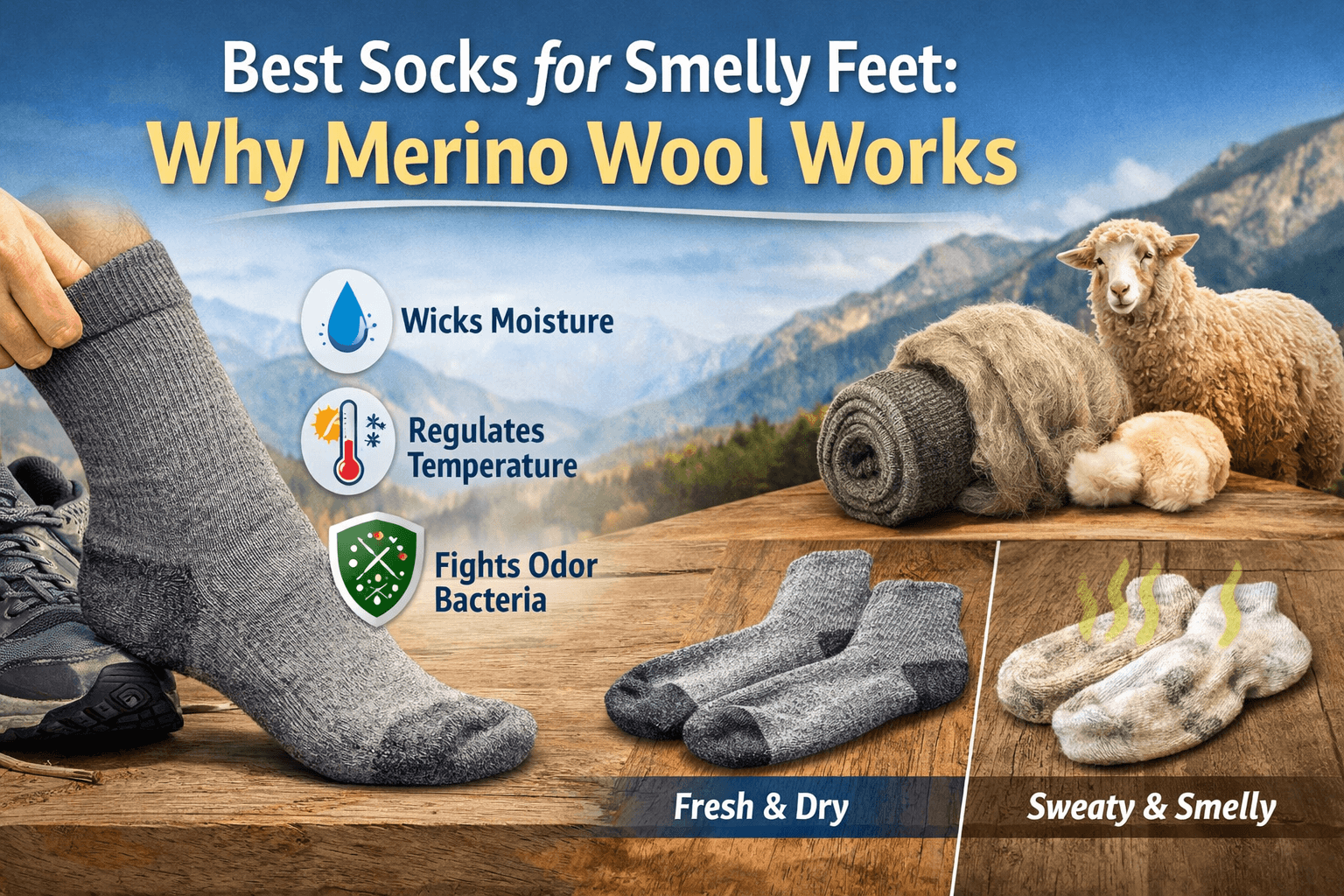
The best socks for smelly feet are merino wool socks because they wick moisture, regulate temperature, and naturally resist odor-causing bacteria.
The good news is most smelly sock problems can be fixed with one simple change: switching to well-made Merino wool socks. This guide explains the science of stink, why Merino outperforms cotton and synthetics, and exactly how to choose and care for socks that keep feet fresher all day. Along the way, you’ll get practical steps you can use today, plus a simple one‑week reset to break the cycle of odor for good.
Consider this your friendly, expert roadmap to odor‑free feet without gimmicks, powders, or constant washing.
The Real Reason Socks Smell
Sweat itself is nearly odorless. The smell comes when bacteria on your skin metabolize sweat and skin oils, producing volatile compounds that linger in socks and shoes. Feet are ground zero for this chemistry because they have a high density of sweat glands and spend hours in a warm, enclosed space.
Stink thrives when three conditions stack up:
- Heat builds inside shoes, making feet sweat more.
- Moisture has nowhere to go, so it sits on the skin and in the sock.
- Airflow is poor, so everything stays damp and warm, creating ideal conditions for bacterial growth.
The fabric you wear can either amplify that mess or break it. Cotton holds moisture like a sponge, and many synthetics move sweat but hang onto odor. Merino wool socks solve all three problems at once, making them one of the best socks for smelly feet.
Why Merino Wool Socks Stop Odor at the Source
Merino isn’t “grandpa’s wool.” These are ultra‑fine fibers that are soft against skin, temperature‑smart, and engineered by nature to manage moisture. Here’s why that matters for odor control:
- It moves moisture off your skin. Merino absorbs vapor before it becomes liquid sweat, then wicks it outward to evaporate.
- It regulates temperature. Merino helps release excess heat when you’re warm and insulates when you’re cool, so your feet avoid the sweat spikes that trigger stink.
- It’s naturally odor‑resistant. The fiber’s complex, scaly structure and keratin content help bind and trap odor molecules until washing. Many people notice Merino stays fresher for multiple wears.
- It feels great next to skin. Fine Merino fibers bend easily, reducing itch and friction. This is key for comfort and for preventing hot spots or blisters caused by damp socks rubbing against your skin.
If you’ve tried “moisture‑wicking” socks that still smell by lunch, you’ll likely notice a different outcome with Merino after just a couple of days. Consider testing one pair this week.
Merino vs. Cotton vs. Synthetics Socks: What Changes in Real Life
- Cotton: cozy out of the drawer, but it soaks and holds moisture. Once damp, cotton stays damp and amplifies odor, friction, and chill. Great for pajamas, not for long days in shoes.
- Common synthetics (like polyester): often wick moisture well and dry quickly, but the fibers can cling to odors that don’t fully release in the wash. This is why gym socks can smell “clean but not fresh.”
- Merino wool: wicks, breathes, buffers temperature, and resists odor naturally. The result most people feel is steady comfort and noticeably less funk even on long shifts, travel days, or workouts.
If you want fewer odors without changing your routine, Merino offers the highest odds of success.
How Sock Design Multiplies Merino’s Benefits
Material is half the story. Construction is the other half. Look for these features to get the most from Merino:
- Close, performance fit: Socks should hug the foot without squeezing. A secure fit keeps Merino in contact with skin so moisture moves away quickly and fabric doesn’t bunch.
- Targeted cushioning: Terry loop cushioning underfoot and at the heel/toe adds more Merino where you sweat and strike most, boosting moisture uptake and comfort. Avoid over‑cushioning that crowds your shoes.
- Breathable mesh zones: Ventilation panels over the instep or sides promote airflow so heat escapes and surfaces dry faster.
- Seamless or flat toe: Reduces friction at a notorious hot spot, especially helpful for walkers, runners, and anyone on their feet all day.
- Durable blends: Pure wool socks aren’t ideal. The sweet spot is a Merino‑rich blend supported by nylon for strength and a touch of elastane/spandex for stretch. Many high‑performing socks land around 40–70% Merino by content.
Check your current pairs. If seams rub or the sock slouches into your shoe, upgrade fit and construction when you switch to Merino, you’ll feel the difference immediately.
How to Choose Merino Wool Socks for Odor‑Free Feet
Match your pair to your life. A quick guide:
- Everyday and office: Lightweight or midweight crew or ankle socks with a smooth knit and light cushion. They’ll breathe in dress shoes and keep up with commuting without bulk.
- Work boots and long shifts: Midweight to heavyweight crews with reinforced heels/toes and targeted cushion. Prioritize snug fit so the sock doesn’t migrate as you move.
- Running and training: Lightweight, breathable designs with mesh over the instep and a secure heel cup. Low, quarter, and mid‑crew heights all work well. Choose the style that pairs best with your shoes.
- Hiking and travel: Versatile midweight crews. On multi‑day trips, many travelers wear Merino multiple days; air them out overnight and rotate pairs for best freshness.
Fit and size tips:
- Choose your true shoe size; don’t size down “for compression” unless it’s a purpose‑built compression sock.
- If you’re between sizes, consider foot volume and intended use. Thicker hiking models often fill shoes more; runners may prefer a sleeker fit.
- Height matters. Taller cuffs help keep debris out on trails and reduce rubbing at the collar of boots.
Start with two pairs tailored to your highest‑sweat situations, such as boot days or runs, and you’ll see how much your odor level drops. Most people never go back.
Care and Washing: Keep the Odor Resistance Working
Merino’s odor control is durable, but good care keeps it performing its best.
- Turn socks inside out before washing. This exposes sweat and skin cells to the wash water.
- Use cold water on a gentle cycle (or hand‑wash if you prefer). Hot water isn’t necessary and can be hard on fibers over time.
- Choose a mild detergent. Skip bleach and fabric softeners; they can coat or degrade fibers and reduce breathability.
- Air‑dry flat or hang dry. High dryer heat can stress elastic and shrink blends. If you must machine‑dry, use low heat.
- Rotate pairs. Even if Merino can handle repeat wears, giving socks a night to fully dry restores freshness and lengthens lifespan.
Set a “wool” or “delicate” preset on your machine today, it’s a one‑time tweak that pays off for years.
Beyond Socks: Quick Wins for Fresh Feet and Shoes
Merino handles a lot on its own, but a few small habits make it nearly foolproof.
- Dry feet thoroughly post‑shower. Moisture between toes is prime odor real estate.
- Give shoes a full day to dry. Rotate pairs; pull out insoles to speed drying.
- Air out footwear. Loosen laces and open them up the moment you get home; warm air trapped inside keeps bacteria busy.
- Treat the shoe environment. A light sprinkle of baking soda overnight, removable/replaceable insoles, cedar shoe trees, or a purpose‑built shoe dryer can help. Consider UV sanitizers if you deal with persistent odor.
- Pack a spare pair. A mid‑day Merino swap resets comfort and drastically cuts smell in high‑sweat scenarios.
- Use foot antiperspirant carefully. Some people benefit from a targeted antiperspirant at night; patch‑test first to avoid irritation.
- Be cautious with powders. They can clump when damp and create friction, so use them sparingly if at all.
If you notice scaling skin, intense itch, or persistent odor that doesn’t improve with better socks and shoe care, consider checking with a clinician to rule out treatable skin conditions.
Common Myths and Mistakes
- “Wool is itchy.” Old‑school wool could be. Fine‑gauge Merino feels soft and smooth for most people.
- “Wool is too hot for summer.” Merino breathes and regulates temperature, SO many runners and hikers wear it year‑round for that reason.
- “More pairs = fewer smells.” It’s not just quantity; it’s quality and rotation. Two Merino pairs, alternated, can outperform a drawer full of cotton.
- “Liner socks stop blisters and odor.” Often liners add bulk and slip. Well‑fitted, Merino‑rich socks next‑to‑skin usually work better.
- “Deodorizing spray fixes everything.” Sprays can mask smells in the short term. They don’t change the heat‑moisture‑airflow equation that causes odor.
7-Day Plan to Get Rid of Smelly Feet
Try this simple plan to break the odor cycle and feel what Merino can do. No special gear beyond two Merino pairs.
Day 1–2: Wear Merino to your highest‑sweat activity. Air socks overnight; open and dry shoes near a fan.
Day 3: Alternate your two Merino pairs. Wash the first pair inside‑out on cold; air‑dry.
Day 4: Add a mid‑day sock change if your job or workout is intense. Notice end‑of‑day smell vs. your old routine.
Day 5: Treat shoes: sprinkle baking soda overnight and remove insoles to dry.
Day 6: Audit fit. If socks bunch or your shoes rub, adjust lacing or try a different sock thickness.
Day 7: Decide what worked. Most readers choose to add two more pairs at this point to build an easy rotation.
Commit to the seven‑day reset starting next Monday. Set a reminder now so it actually happens.
Conclusion
Foot odor isn’t a personal failing, but it’s a fabric and environment problem. Socks that trap heat and moisture invite bacteria to do their thing. Merino wool socks solve the root causes by wicking moisture off your skin, regulating temperature, and naturally resisting odor, especially when paired with smart sock construction. Choose Merino‑rich blends sized for your activity, rotate pairs, wash inside‑out on cold, and let shoes dry between wears. Add simple shoe‑care habits and, if needed, a mid‑day sock swap. In one week, most people notice dramatically fresher feet and less laundry drama.
You don’t have to live with smelly socks. Pick one Merino pair designed for your toughest odor moments and test it this week. If your feet feel drier and your shoes smell better at day’s end, build a simple rotation and keep the momentum going. Fresh, comfortable, odor-free feet are closer than you think. Take the first step today.