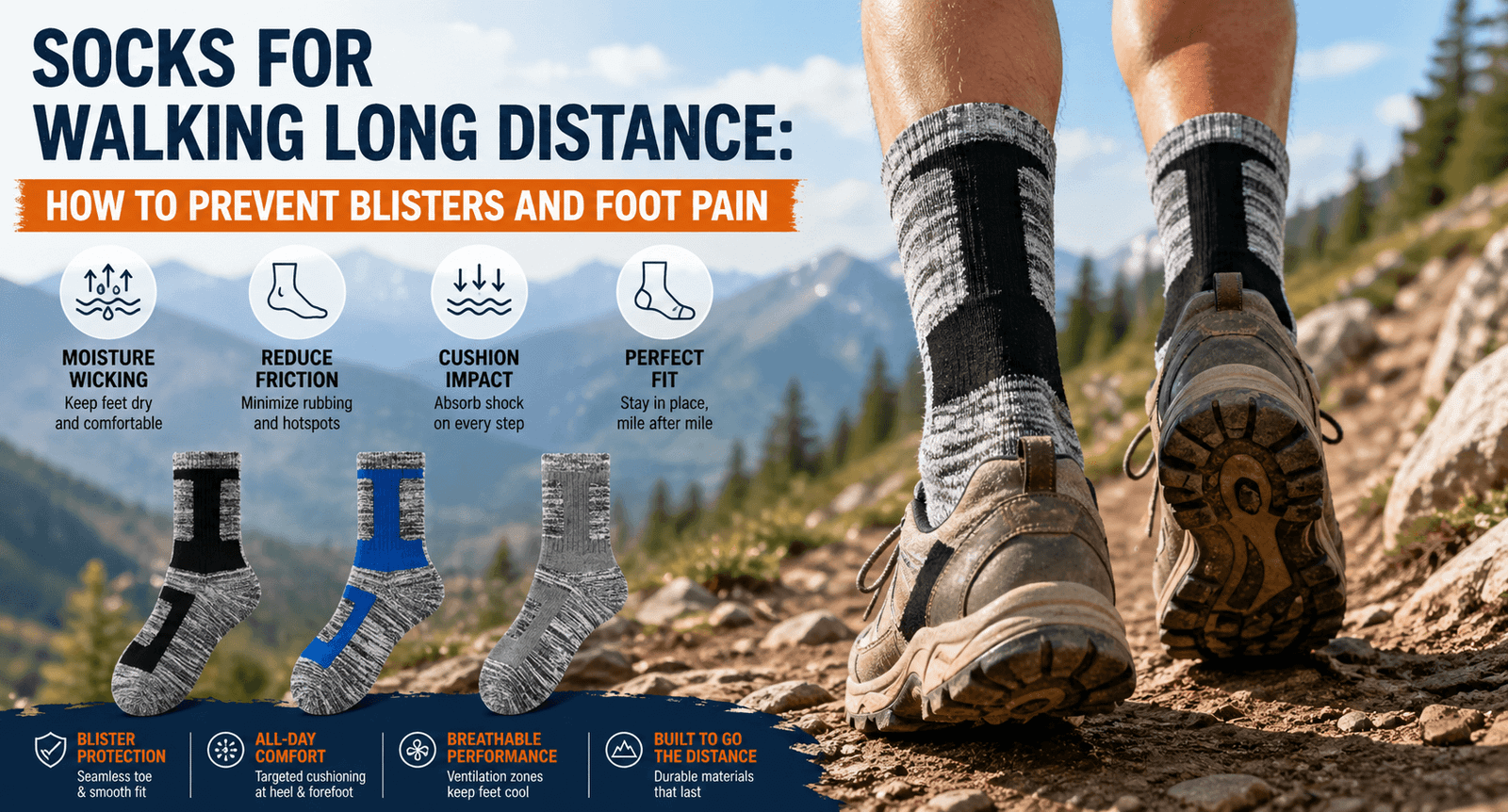
Blisters at mile six. Soggy, pruney toes. Heels that feel like you’ve been jumping on concrete. If any of this sounds familiar your socks not your shoes are often the real culprit. For long-distance walkers, the right socks quietly do three jobs at once: manage moisture, reduce friction, and disperse impact. Get those right and you unlock steadier pace, fewer hot spots, and far more enjoyable miles.
This guide distills what experienced distance walkers, podiatrists, and fitters consistently agree on, then turns it into clear steps you can use today. You’ll learn which fabrics actually stay dry, how much cushioning you really need, and why tiny construction details can determine whether you finish with a smile or a limp. Along the way you’ll find practical, non-salesy suggestions so you can pick with confidence and get moving sooner.
If you’ve ever invested in great shoes but still ended up with sore feet, don’t repeat the same mistake. Dialing in your socks is the fastest and cheapest upgrade you can make before your next long walk.
Why the socks for walking long distances matter
Over distance, small issues compound. A slightly damp sock becomes a friction factory. A loose heel or bunched toe box creates micro-rubs that turn into blisters. Thin, unsupportive fabric pounds your fat pads with every step until your feet feel bruised. Good long-distance walking socks interrupt that chain. They pull sweat off your skin fit like a second layer to prevent wrinkling and cushion the places that absorb the most impact including heel and forefoot without getting spongy or sloppy.
Skipping this step is costly. Ignoring moisture and fit doesn’t just risk a blister or two; it can force a training reset or cut a charity walk short. Many walkers find that once they switch into purpose-built socks, pace steadies and recovery improves simply because skin stays calmer and impact is better managed. If you’ve never tried performance walking or hiking socks, don’t miss the benefits of this small change.
Materials for long-distance walking socks
For long-distance walking socks, fiber choice controls moisture, temperature, softness, odor, and durability. For long walks, three categories dominate.
- Merino wool blends: Merino is the distance favorite because it manages moisture and temperature exceptionally well. Its fibers can absorb vapor before sweat forms on your skin, helping feet feel drier across a wider range of conditions. Merino also resists odor and stays warm when damp. The best distance socks pair merino with nylon for durability and a touch of elastane for stretch and recovery. If you walk through shifting temperatures, or your feet run both hot and cold, start here; for trail-heavy routes, see Cozocks’ guide to the best socks for hiking. Consider trying a medium-weight merino‑nylon blend if you want one sock that can span most seasons.
- Technical synthetics: Synthetics excel at quick-drying and lightness. They shine in hot, humid climates or for walkers whose shoes already provide generous cushioning. Look for densely knit nylon for durability and structured support, and for engineered mesh zones that ventilate over the top of the foot;Cozocks’ Breathable Athletic Socks are one example to compare when you want airflow, a secure fit, and reinforced heel-and-toe durability.
- Cotton: Cotton feels soft initially but holds onto moisture, which increases friction and blister risk as miles stack up. For long-distance efforts, reserve cotton for lounging, not for training or events. If your skin is sensitive and you like the feel of cotton, consider merino or bamboo‑viscose blends instead they’re gentler without the moisture penalty.
Fabric percentages matter less than overall design quality. A well-constructed 40–60% merino blend can outperform a higher-wool sock with poor fit or weak heel construction.
Cushioning and thickness: match sock to terrain and shoe volume
Cushioning isn’t just “more is better.” It’s a balance among surface, shoe, and your biomechanics.
- Light cushion: Best with plushly cushioned shoes, in hot weather, or for faster-paced fitness walks. Keeps stack height low and breathability high. If your current shoes feel snug, a lighter sock prevents crowding the toe box.
- Medium cushion: The most versatile choice for long walks. Enough padding under the heel and forefoot to tame hard sidewalks, but still breathable and stable inside the shoe. Many distance walkers settle here for city miles and light trails.
- Max cushion: Ideal for extended time on concrete, heavy bodyweight, rugged terrain, or when your shoes are firm. Max cushioning should feel protective, not marshmallowy. If the sock bulks up so much that your shoe fit tightens or your foot slides on descents, step down a level.
A good rule: Your foot should feel cradled yet planted. If you notice squish without support or numb toes from reduced space rethink thickness before blaming your shoes.
Walking socks to prevent blisters: fit details that matter
Long-distance comfort lives in the details. Prioritize these build features:
- Deep heel pocket with Y-shaped stitching: Locks the heel so fabric doesn’t creep down or fold under your foot on climbs or stairs. Many readers choose this feature when they’ve battled heel blisters.
- Hand-linked or seamless toe: Reduces the ridge across your toe line. Even a small seam can rub raw over 10–20 miles.
- Targeted padding: Reinforced heel and forefoot absorb impact; a slightly thinner instep prevents pressure over your laces and improves breathability.
- Arch wrap or light compression: Gentle midfoot support keeps the sock from migrating and can reduce fatigue during long efforts. If you’ve felt your socks “rotate” inside your shoe, look for a snug midfoot.
- Ventilation zones: Mesh over the top of the foot or along the sides increases airflow where heat builds most.
- Anatomical left/right shaping: Prevents excess fabric at the big toe or little toe and reduces wrinkling for blister-prone walkers.
- Heel tab (on low cuts): Shields the Achilles from collar rub and helps anchor the sock during stride and during quick on/off at aid stations.
Consider trying one pair with anatomical shaping and one without; the difference can be dramatic if you’ve fought toe blisters.
Length for walking: no-show, ankle, crew or compression
Length is more than style it’s protection and performance.
- No‑show/tab: Coolest option for road walking and gym sessions. Choose models with a heel tab and silicone grippers if your shoes tend to rub the Achilles. Avoid super low cuts in gritty, sandy areas.
- Ankle/quarter: Adds a touch of debris protection and prevents collar rub without much added warmth. A smart pick for mixed city‑to‑park routes.
- Crew/micro crew: The go-to for trail days, cooler temps, or when you want a stable cuff that stays put. Protects against pebbles and brush; pairs well with both shoes and light boots.
- Knee‑high/compression: Graduated compression can help manage swelling on very long days or during travel to and from events. Fit is critical; follow size charts, and if you have circulatory conditions, consult a professional first. For most walkers, light-to-moderate compression is more comfortable than very firm ratings.
If you’re unsure, start with quarter or micro crew. They cover more scenarios and are less likely to slip.
Moisture-wicking walking socks for hot, cold and wet weather
Feet don’t like extremes. Your socks should act like climate control.
- Hot and humid: Favor lightweight merino-synthetic blends or all-synthetic designs with open-knit vents; Cozocks’ guide to the best socks for hot weather explains this warm-weather setup in more detail. A second, dry pair mid-walk can be transformational. Swap at the halfway point and let the first pair air-dry on your pack. You might also dust a tiny amount of non‑clumping foot powder before you head out.
- Cool to cold: Increase wool content and cushion. Wool keeps insulating if a drizzle or sweat dampens the fabric. In genuine cold, avoid ultrathin socks unless your shoes have ample insulation.
- Wet routes or variable weather: Merino blends manage chill when damp better than pure synthetics. Pack a spare and rotate; even a five-minute change can save your skin over back‑to‑back days.
- Very sweaty feet: Look for dense-knit nylon with aggressive moisture channels or consider a thin toe-sock liner under a medium-cushion outer sock to reduce skin-on-skin friction between toes.
Don’t overlook drying time. If you need to wash socks nightly on a trip, pick fabrics and thicknesses that air‑dry quickly.
Best walking socks for sweaty feet, bunions, swelling and blisters
- Blister-prone toes: Toe-sock liners isolate each toe and whisk sweat away. They feel odd for a mile, then disappear. Pair with a light or medium outer sock.
- Sensitive skin: Choose soft merino or bamboo‑viscose blends with seamless toes. Avoid abrasive interior terry loops on low-quality socks.
- Wide forefoot or bunions: Seek anatomical shaping and generous toe boxes; avoid overly compressive forefoot panels that press the big-toe joint.
- Plantar fascia and arch fatigue: Light arch compression and firm, targeted underfoot padding can help. Combine with supportive insoles if needed.
- Swelling on long or hot days: Consider light graduated compression in crew or knee‑high lengths. Many walkers find it reduces “end‑of‑day shoe squeeze.”
- Nail issues or black toenails: Preserve toe space by using thinner socks at the front of the shoe and ensuring your nails are short and edges smooth. A flat toe seam is non-negotiable here.
If you manage diabetes, neuropathy, or vascular conditions, prioritize seamless interiors, non‑binding cuffs, and consistent padding, then confirm with your clinician before big mileage.
Quick buying checklist: how to choose long-distance walking socks
- Start with climate: Hot/humid? Lightweight synthetic or merino blend. Mixed or cool? Medium‑cushion merino blend. Cold? Heavier merino with more cushion.
- Check shoe volume: If shoes feel snug, pick lighter socks. If shoes feel roomy or firm, choose medium to max cushion.
- Decide length by terrain: City and paths ankle or quarter. Trails and debris crew or micro crew. Swelling consider compression length.
- Lock in fit features: Deep heel pocket, flat toe seam, targeted heel/forefoot padding, light arch wrap, and ventilation mesh.
- Test at home: Wear your new socks inside your walking shoes for 30–60 minutes with brisk indoor laps. Any seam or pressure you feel now becomes a problem at mile ten, so return or size up or down accordingly.
Many readers buy two styles and rotate based on route and weather; browsing Cozocks Sports Socks can help you compare ankle, crew, and breathable options for active days.
How to wash and rotate walking socks so they last longer
Good socks last for years when you treat them right. Wash inside‑out to remove salt and grit from the fabric loops. Use cool water and mild detergent; skip fabric softener, which coats fibers and sabotages wicking. Air‑dry or tumble low. High heat weakens elastic and shrinks wool.
Rotate pairs so each gets a full day to rebound. If a heel or forefoot thins, downgrade that pair to short walks and save your freshest socks for big-mile days. Traveling? Two to three pairs are enough: wear one, wash one, dry one. Roll socks, don’t ball them, because stretching cuffs shortens their life.
If a favorite pair develops a tiny hole at the toe, a quick mend can extend its life for training walks. Save pristine pairs for events and goal days, you’ll feel the difference.
Walking socks by route: concrete, trails and travel days
- Fast city miles on hard sidewalks: Lightweight to medium‑cushion synthetic or merino blend in ankle or quarter length, breathable mesh over the instep, flat toe seam. If your shoes are firm, lean medium cushion.
- Mixed trail-and-park loops: Medium‑cushion merino blend in micro crew for debris protection, reinforced heel/forefoot, snug arch wrap. Pack a spare pair in humid weather.
- Travel and long sightseeing days: Medium‑cushion, quick‑dry blend in quarter or crew with light compression to manage swelling. Wash at night; they should be dry by morning.
Try building your own two‑sock system: one breathable, lighter pair and one cushioned, all‑day pair. You’ll cover 95% of walking days with effortless decisions.
Final recommendation: the best socks for long walks
The best socks for long walks keep your skin dry, your foot stable, and your stride cushioned mile after mile. Choose merino wool blends or high-quality synthetic blends, avoid cotton for serious walking, and match cushioning to your shoes and walking surface.
Prioritize flat toe seams, deep heel pockets, targeted padding, arch support, and breathable zones. Choose sock length based on your route, and consider light compression if swelling is a recurring issue.
Try this before your next long walk
Open your walking shoe closet and check the socks you wear most. Do they stay dry? Do they fit without wrinkles? Do they cushion the heel and forefoot without crowding your toes?
If not, start with two pairs: one medium-cushion merino blend for versatile miles and one lightweight quick-dry pair for hot days. Rotate them by route and weather, and you may feel the difference on your very next long walk.